You have heard of Passau, of course. Probably from the High School Geography lessons, when you were told that this is the starting point of commercial river navigation on the Danube, one of the major waterways crossing Europe downstream from West to East, all the way to the Black Sea. Here my knowledge was reaching its limit, and as my niece exclaimed when, prompted by some curiosity, we decided to visit and see: “Why don’t they ever tell us these things in school?!” The place exceeded our expectations by far.
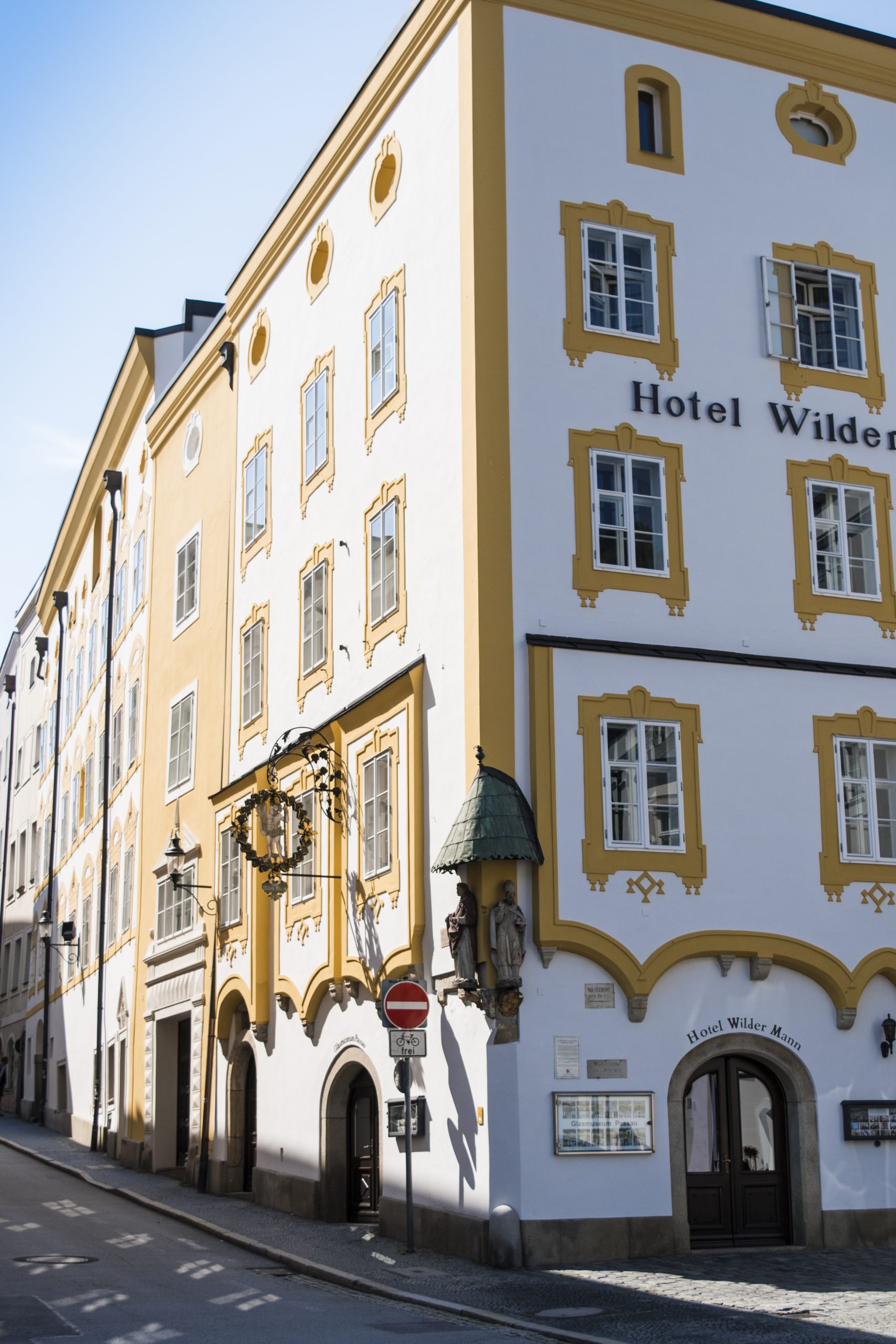
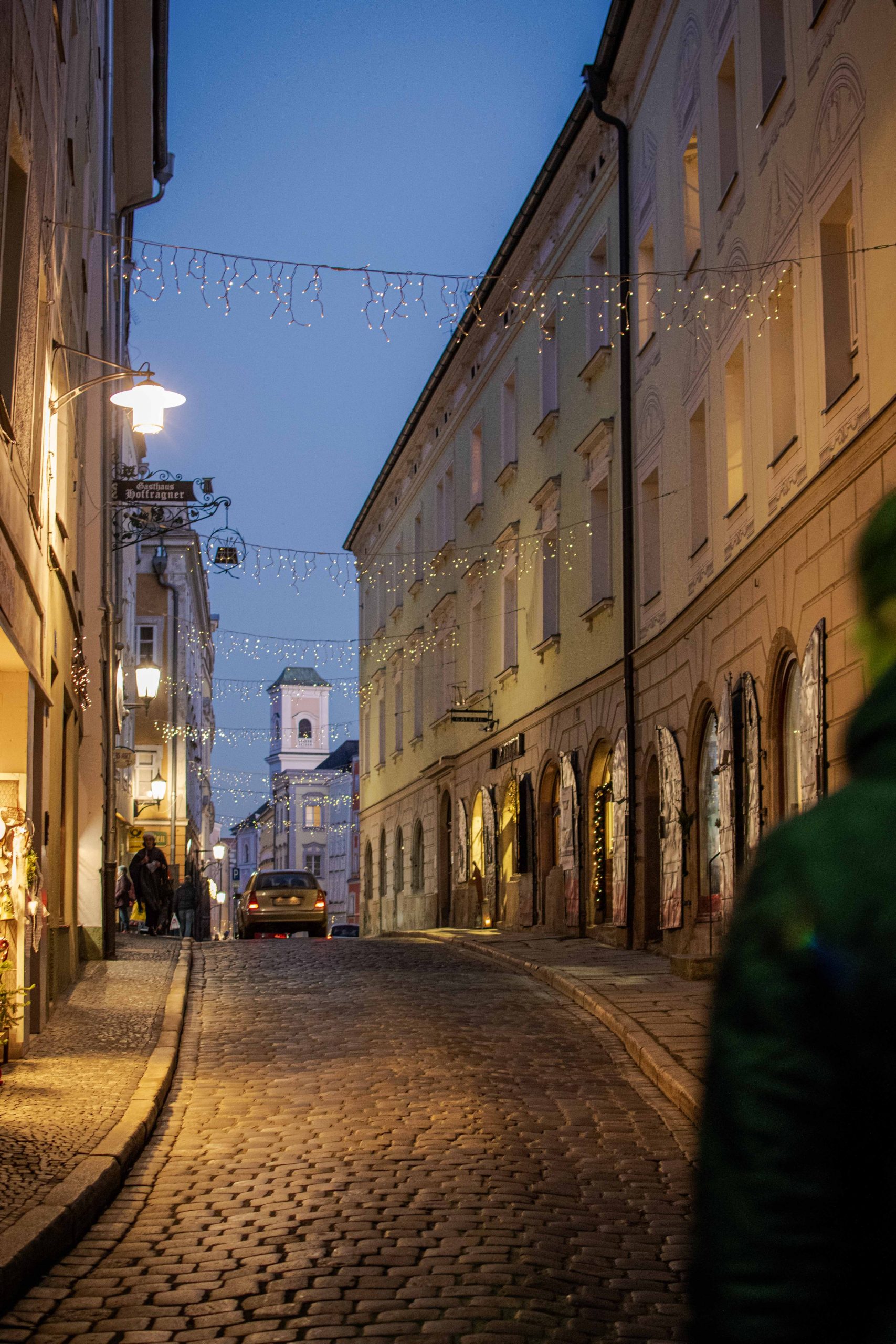
What I did not know and at school this fact was somehow omitted was that this is an extraordinary and ancient city, whose uniqueness comes from its favourable location on the confluence of three rivers, bringing not only their waters, but also unique cultural and artistic influence. All these signs can be traced in the romantically beautiful Old Town with its remarkable Baroque historic centre full of mansions and palaces, in the distinctive atmosphere of its small squares, winding cobblestone streets and narrow alleys.
Such a favourable location could not have escaped the attention of the greatest strategists of all times. Thus, Passau was first mentioned as Batavius, a Roman castrum and provincial centre. The rapid development began in 739 with the establishment of an independent diocese and episcopal residence. From the 13th century the city was ruled by prince-bishops as an independent small principality. During this period, Passau began to flourish and acquired important economic, social, artistic and cultural significance in this part of the Danube valley.
Until 1803 when under Napoleon Passau became part of Bavaria.
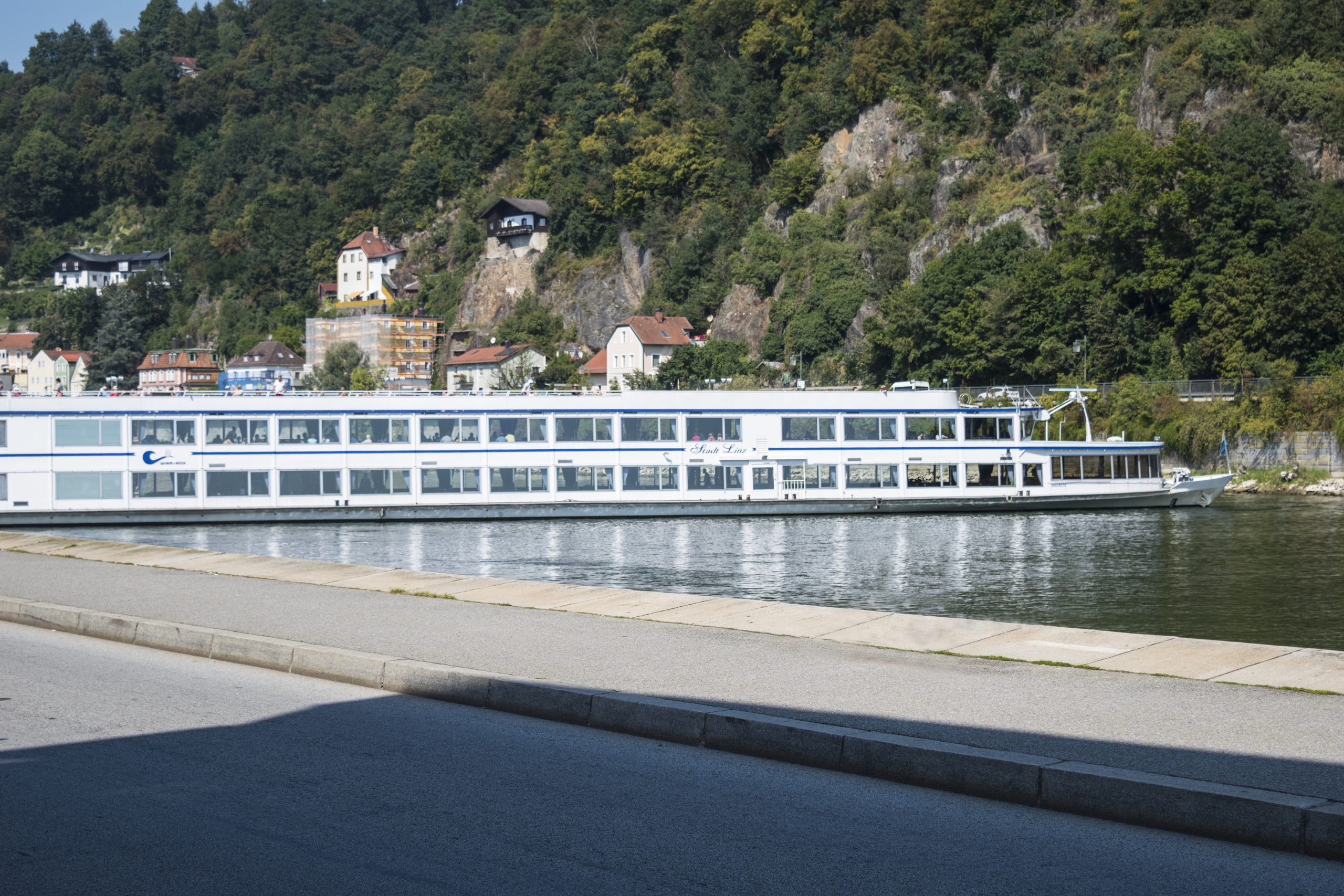
When arriving by car, there are two ways to reach the historic Altstadt. The more obvious one is along the riverside promenade past the Danube river docks where the cruise ships arrive. There is something especially romantic and exceptionally timeless about river navigation. Reflecting on where this fascination came from and recalling the Nile novels of Agatha Christie and Mark Twain’s Mississippi Adventures of Tom Soyer, the arriving cruiser began reversing towards the dock, not an easy task, provided the length of the ship is almost equal to the width of the river in this section.
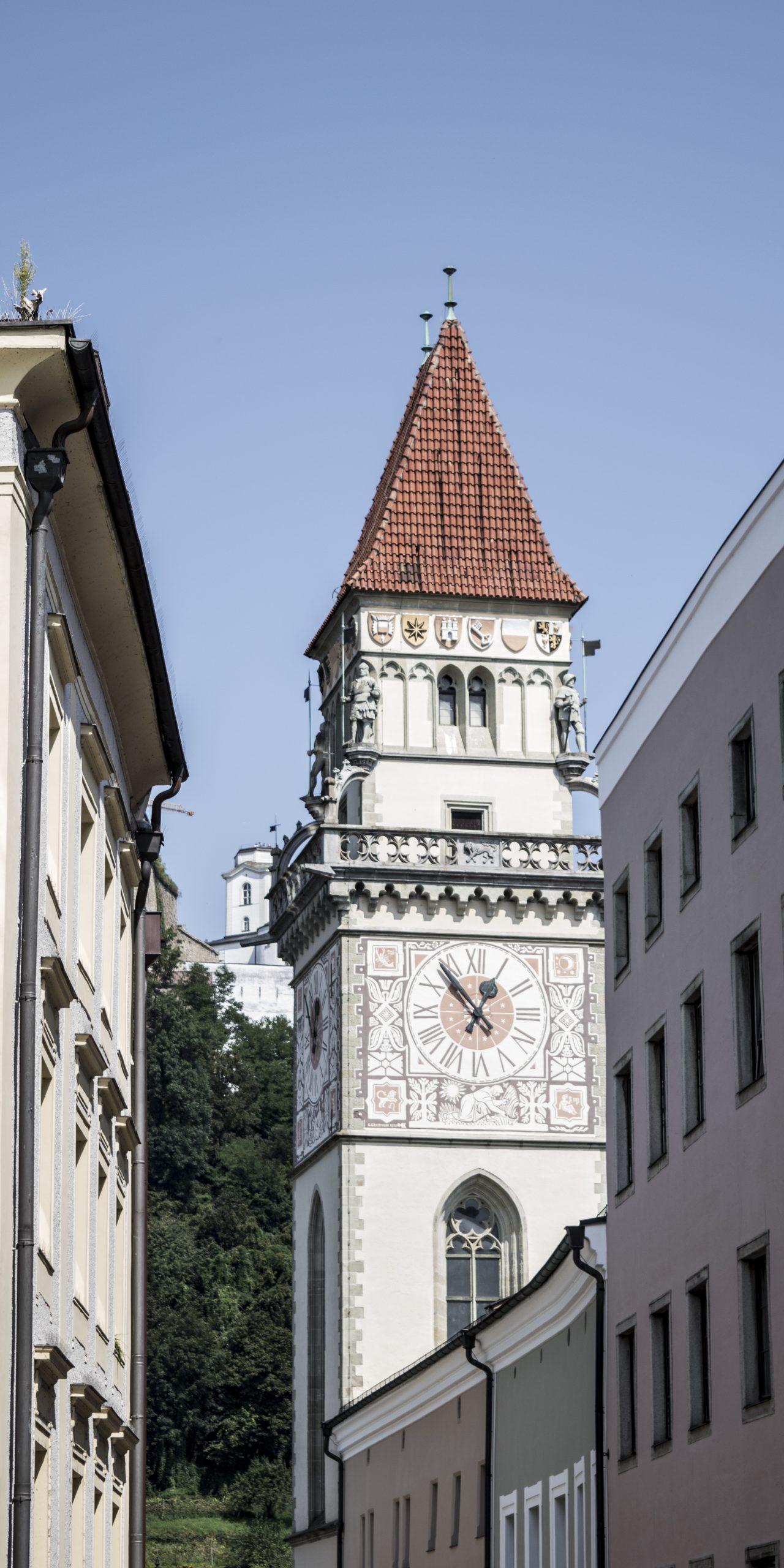
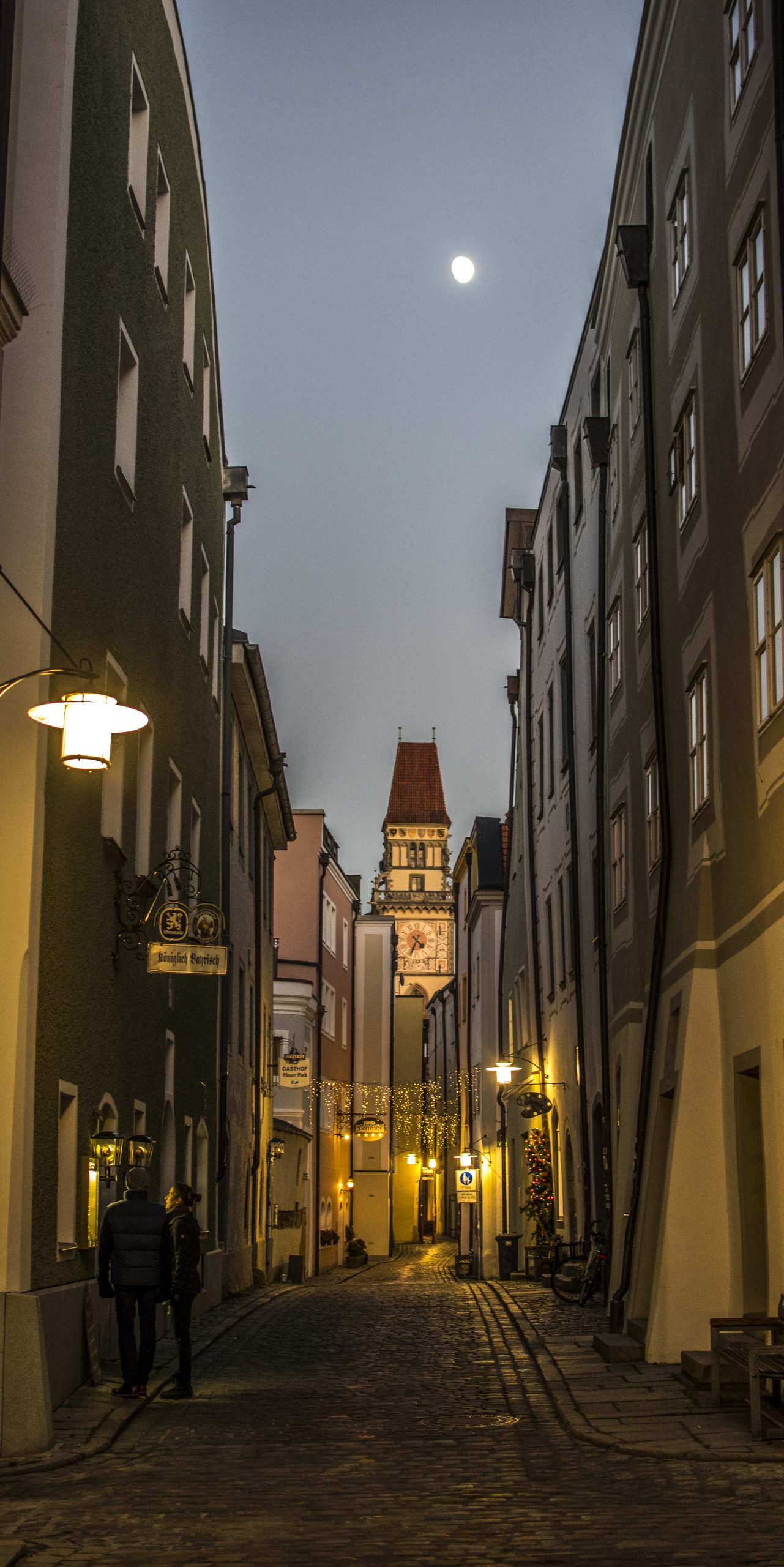
After that remarkable ‘performance’, we came across a small square with cozy café and one of the most prominent buildings of Passau’s Old Town. Built in Venetian style with its 38 metres high tower, the Old Town Hall is remarkable for its façade paintings of Emperor Ludwig of Bavaria and four dignitaries with their flags: the Electorates of Saxony, Trier, Cologne and Duchy of Bavaria.
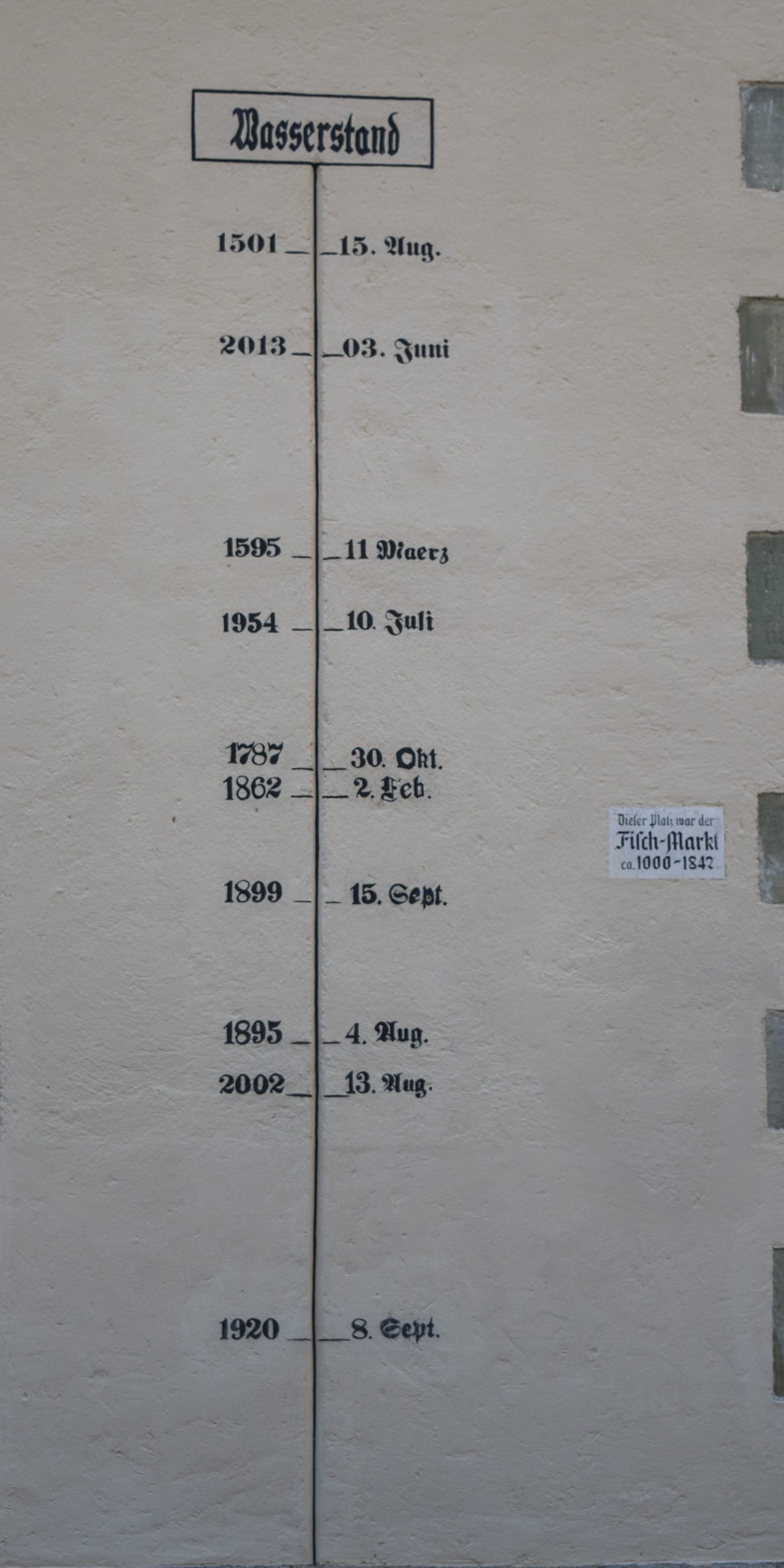
Something else, however, caught my attention: the High-Water Scale on its wall, marking the Danube peak elevations as of 1501. In 2013, the old town suffered from severe flooding after several days of unceasing heavy rain and its location at the confluence of three rivers. High water reaches the base of the Old Townhall wall on average once every 5 years. The latest serious one was in 2024.
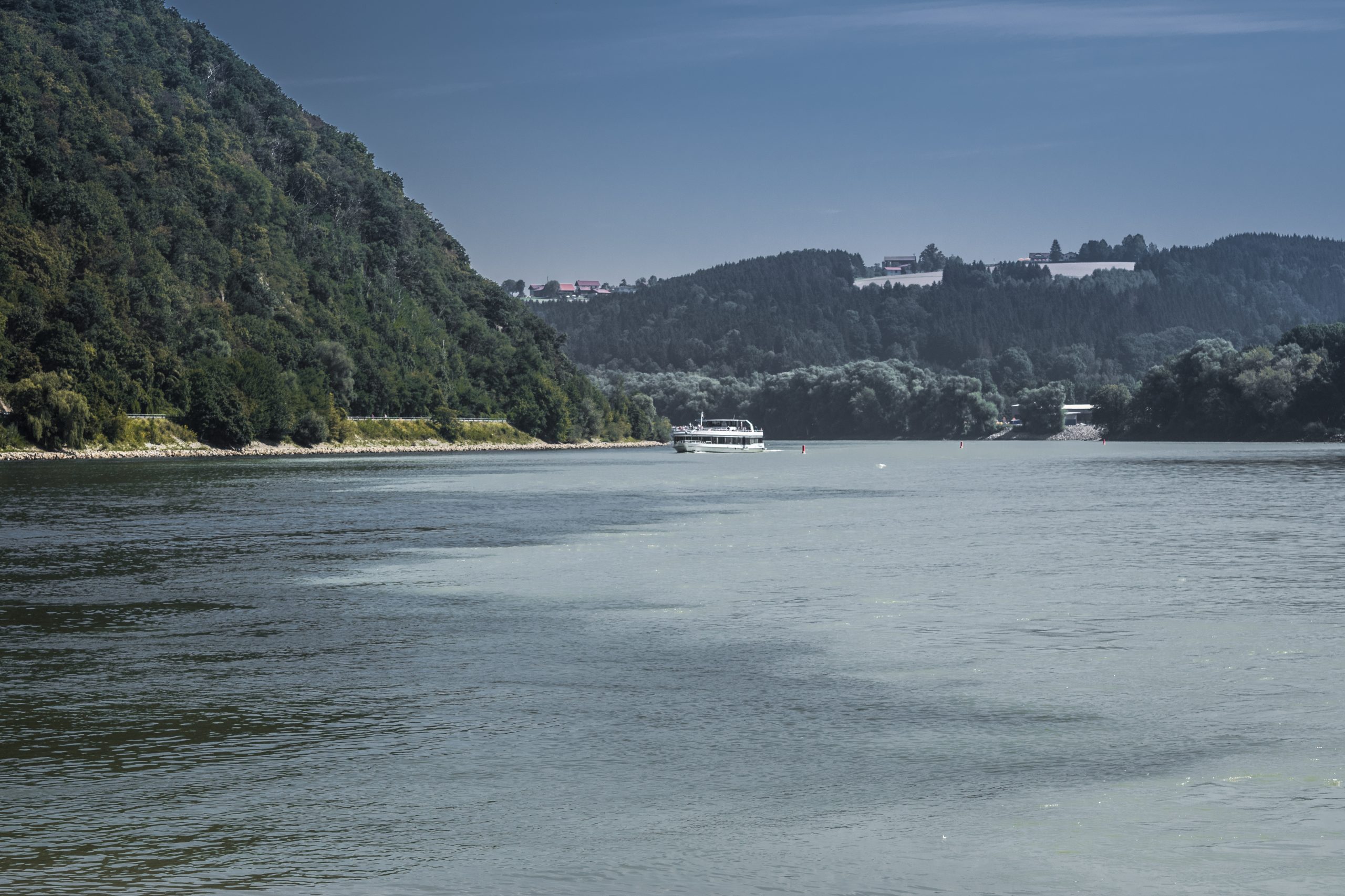
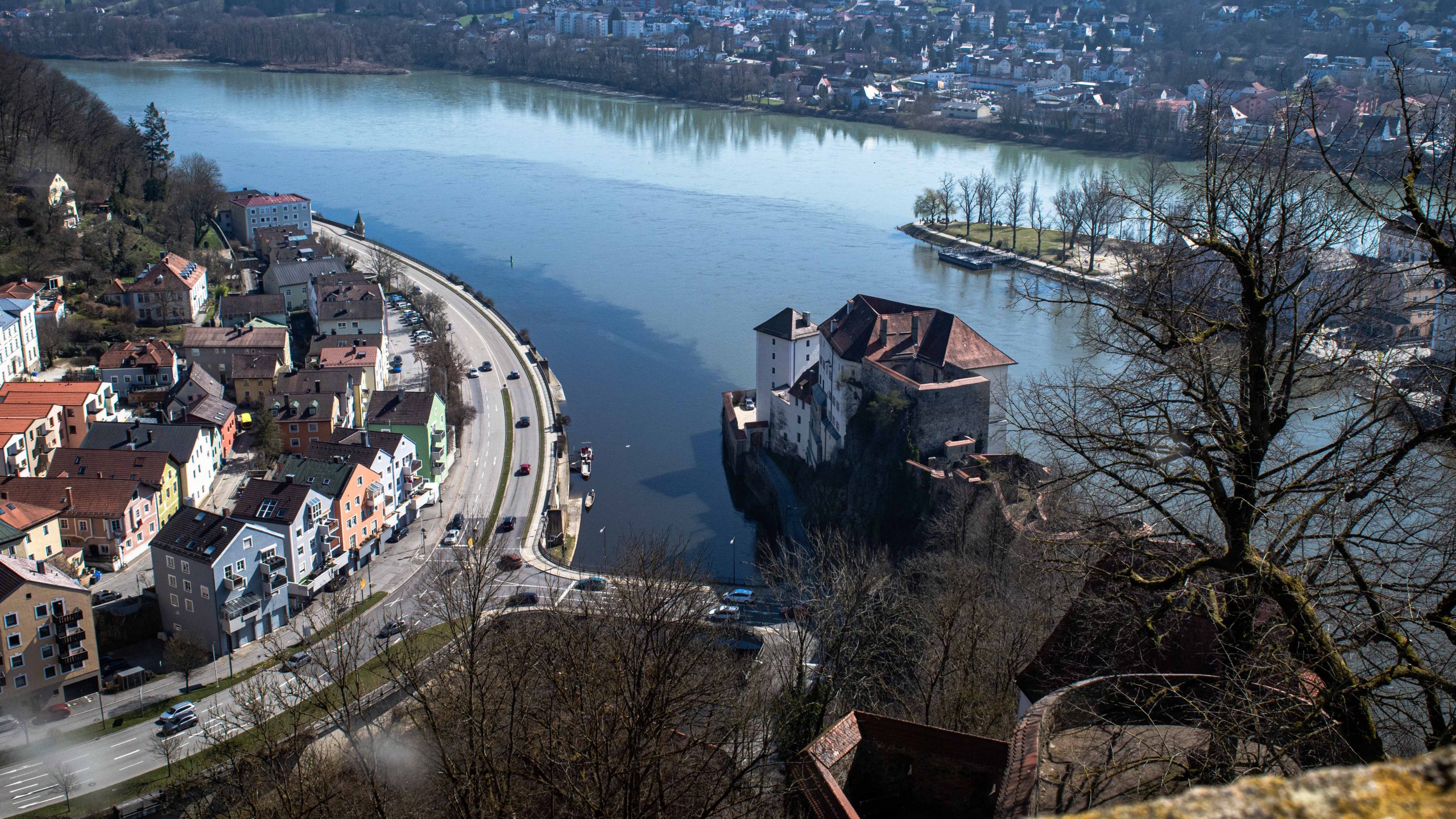
Following the current and enjoying the spectacular site of the fortress Veste Oberhaus we have reached the small park where the three rivers Danube, Inn and Ilz from three different directions meet or Dreiflüsseeck, best observed from the Fortress as we have learned at some later point.
Emerald, sapphire and onyx
The fast emerald-green water of Inn, coming directly from the Alps, meets the sluggish blue (with some imagination involved, it looked more like brownish to me) current of Danube and slowly inflowing black Ilz directly from the neighbouring moorlands.
Standing at this point you are wondering why it is the Danube and not Inn which continues to cross Europe and to become one of the main riverways. Obviously, the Inn is wider and more abundant. However, if you look downstream, you will notice that the colours of the Danube water stretch much longer after the three rivers meet. It is impressive how the powerful green stream of the Inn pushes aside the slow water from the Danube.
There is another logical explanation: the significant difference in the depth of the two rivers, though this is far from obvious. The Danube here is 6.80 metres deep, while Inn is just 1.90. On average, the emerald Inn carries more water during the thawing period, while the Danube, on the other hand, shows significant steady water level for most of the year. Last but not least, for its continuation downstream as Danube is based on both rivers’ route until they arrive in Passau. The Danube trumps 647 kilometres, while Inn with its impressive 510 kilometres is more modest.
Nevertheless, I remained unconvinced.
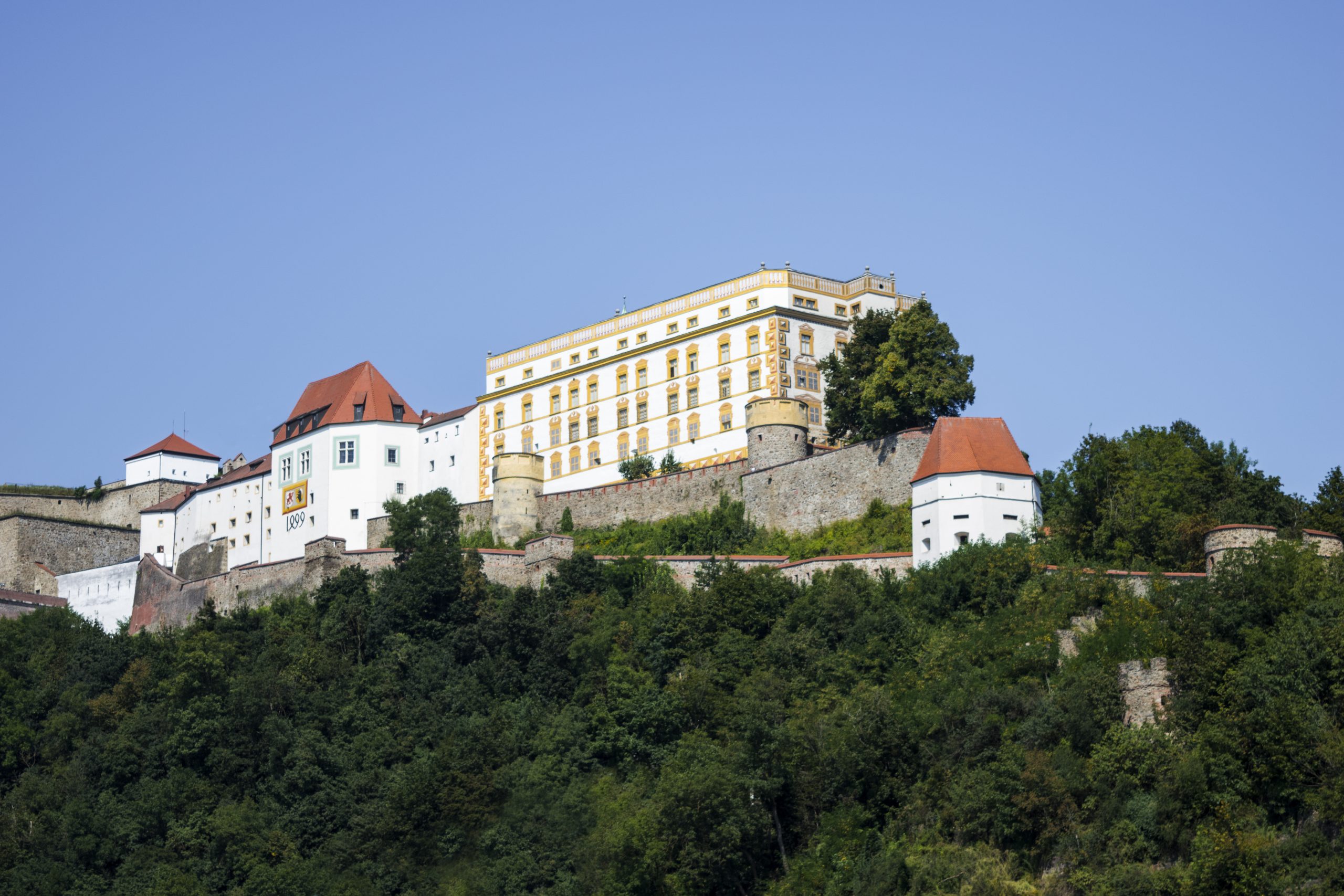
Fortress Veste Oberhaus
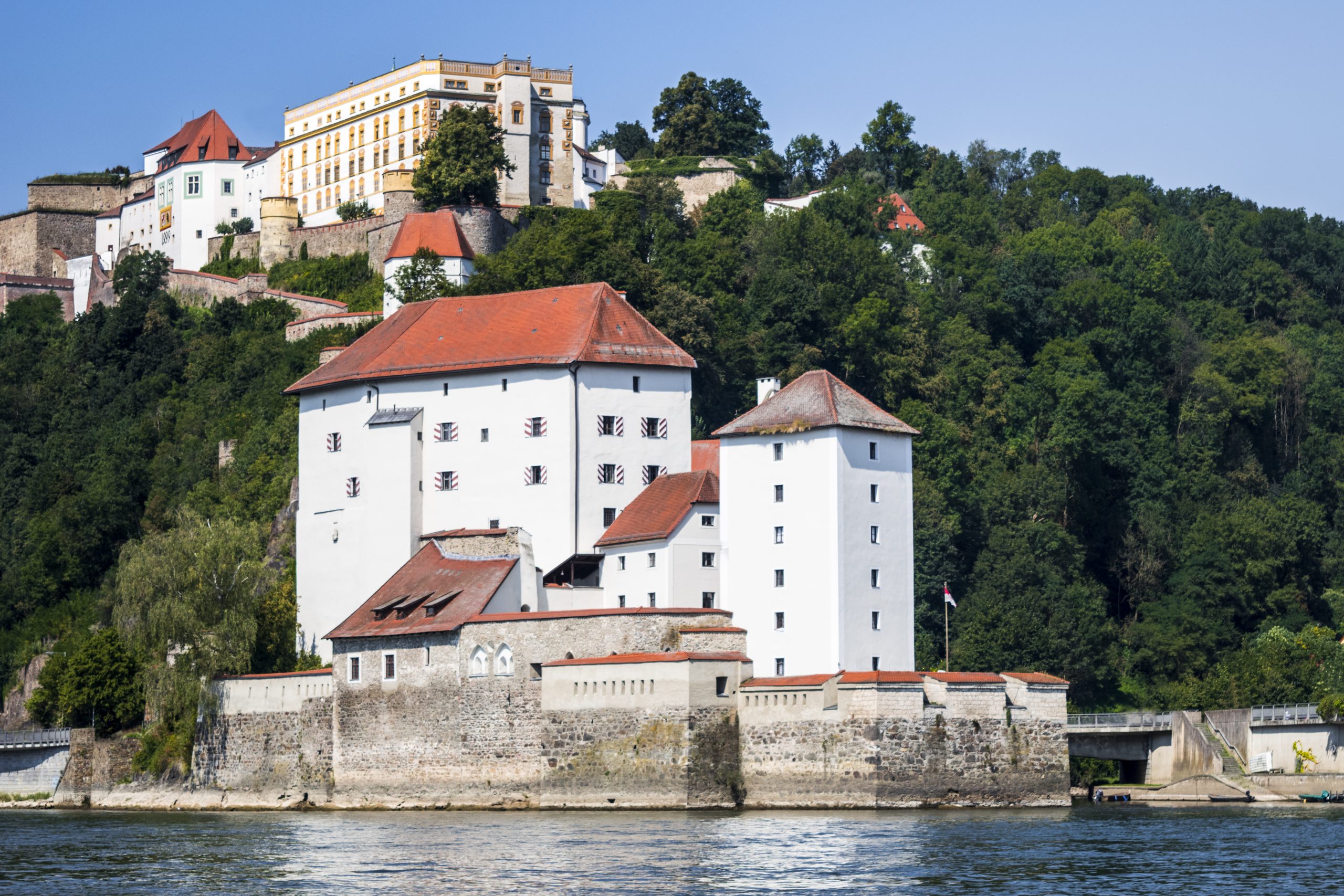
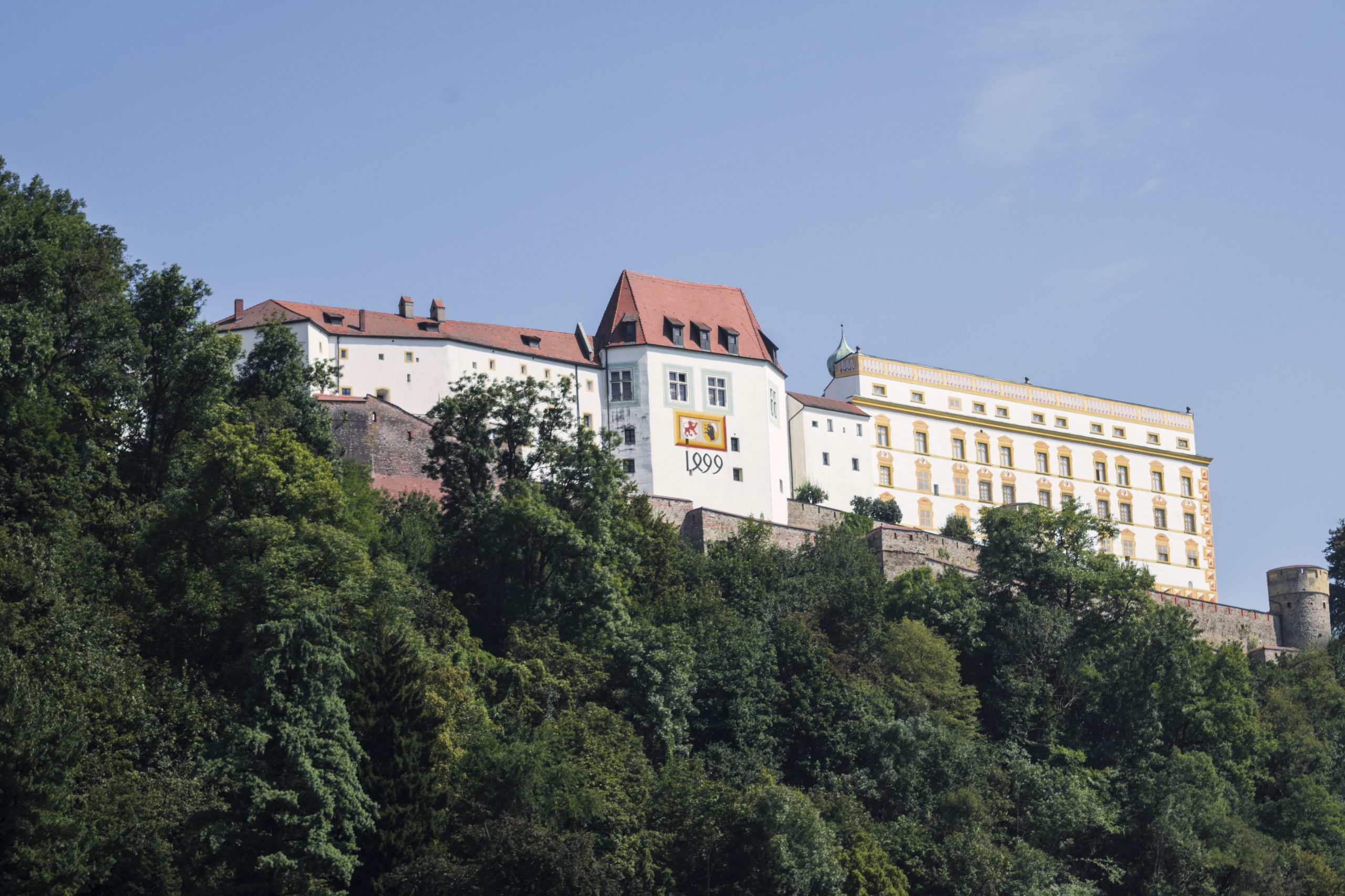
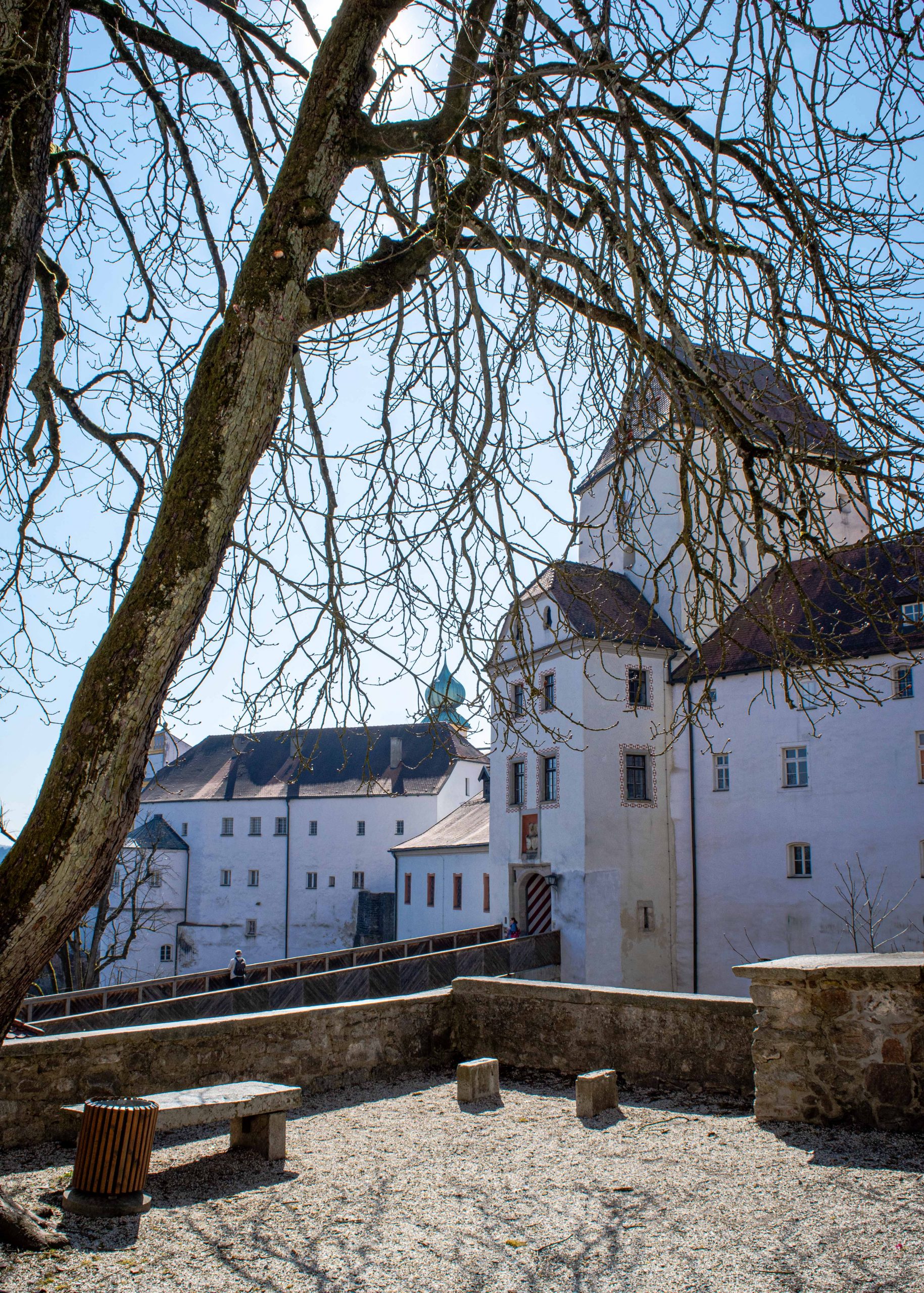
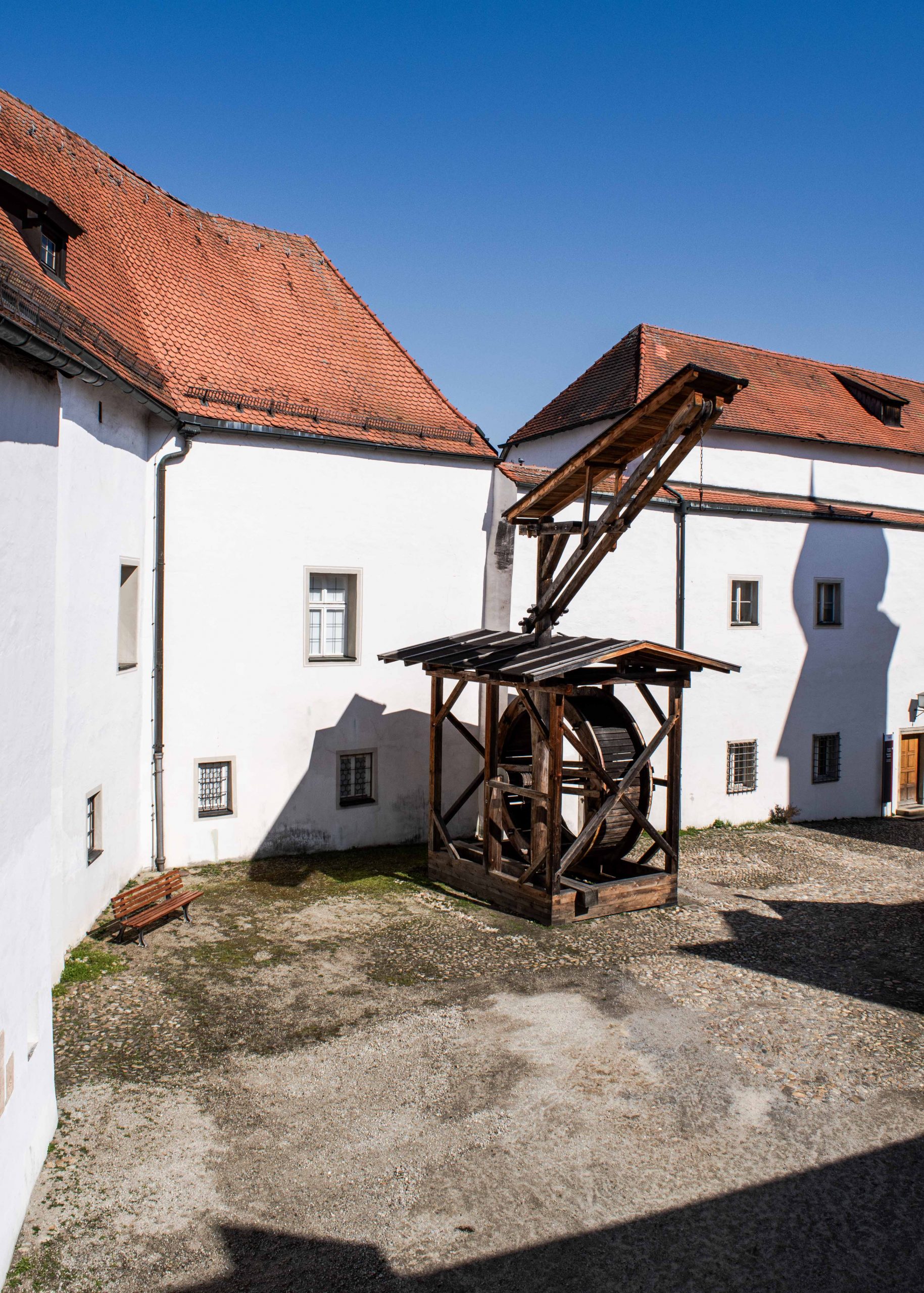
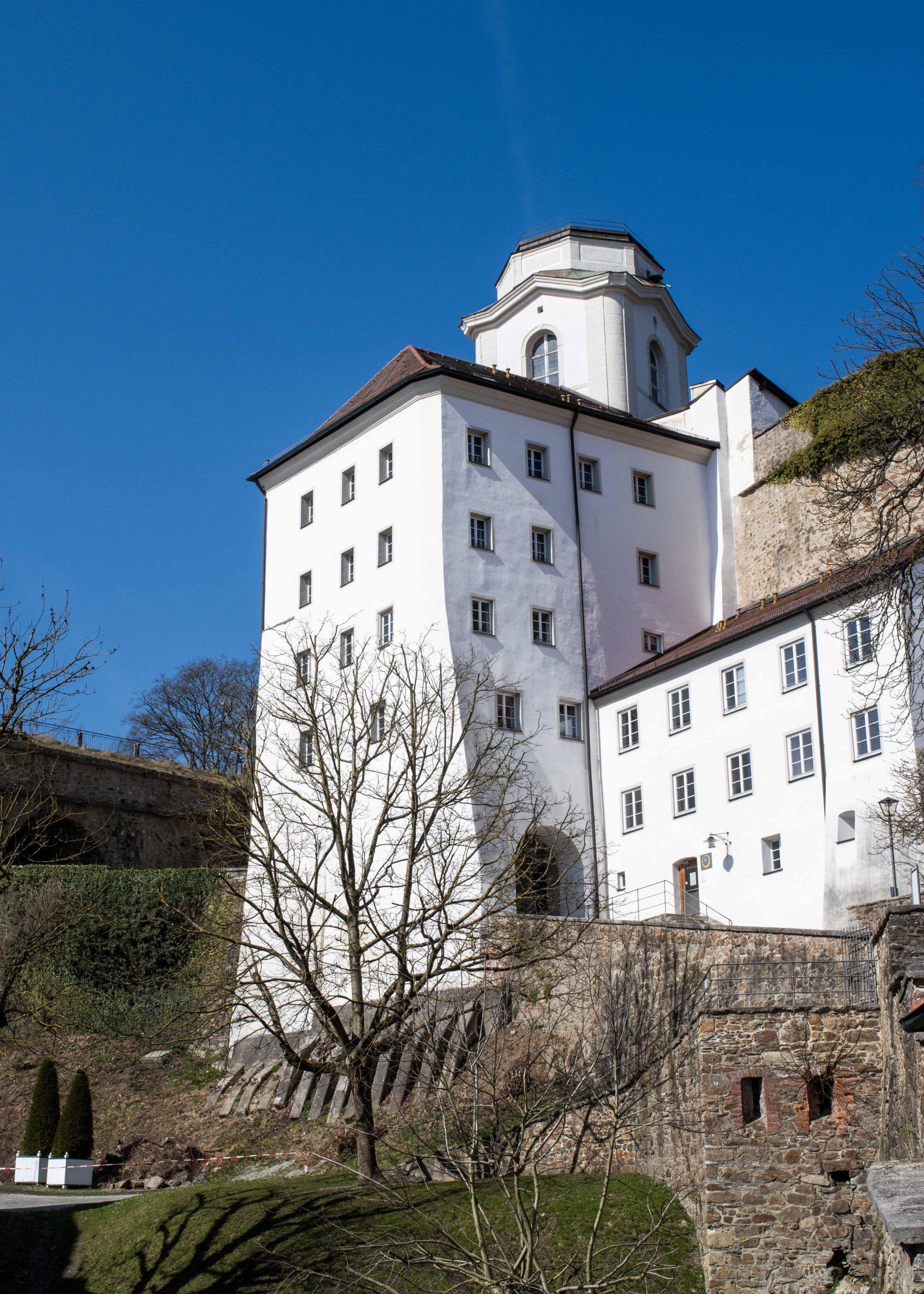
High above Passau, on the other bank of the Danube where it merges with Ilz, towers the Veste Oberhaus, the former residence of the prince-bishops and one of the largest and best-preserved surviving castle complexes in Europe. These historic walls and fortifications make history alive for over 800 years in its own unique way.
Its crossroads’ location at the heart of Europe, where major land and river routes intersected, quickly turned Passau into an important trading centre, where the influx of people and merchandise contributed to its wealth and splendour, as well as its significance as an important diocese, ruled by a prince-bishop with interests that went far beyond the spiritual.
In 1217, Bishop Ulrich II (1215-1221) received the dignity of imperial prince from the later Emperor Frederick II, which made the bishops of Passau spiritual but also the secular rulers of the three-river town. To protect his power and principality, in 1219, Prince Bishop Ulrich II laid the foundation stone for the castle Georgsburg on the-towering high above the Danube Georgsberg. For almost 600 years, the powerful stronghold protected the prince-bishops from their internal and external enemies. Even though the citizens of Passau repeatedly rebelled against their rulers, fighting for more rights and greater independence, their attacks were fruitless. The defiant castle withstood many threats over the centuries. During the Renaissance after the addition of magnificent state and reception rooms turned the castle into Schloss Oberhaus. When Europe was ravaged by wars in the first half of the 17th century, the castle was modernised and the latest state-of-the-art fortifications and bastions were added, making it a difficult-to-conquer fortress. Hence its name,Veste (Fortress).
With secularisation in 1803, both the city of Passau and Veste Oberhaus along with it, fell to the Kingdom of Bavaria. Napoleon Bonaparte, ally to Bavaria in the War against Austria, temporarily used Veste Oberhaus as a bastion. As of 1822 the fortress was turned into political prison and military jail, feared as “Bavarian Bastille”. In 1932, the town of Passau took control of the complex as a museum of the Bavarian-Bohemian-Austrian culture. Within the historic walls and fortifications the Oberhausmuseum presents exciting exhibitions about the life in a castle during the Middle Ages and throws a light on Passau’s colourful history and its importance as a trade centre over the centuries. The various exhibitions are dedicated to the trade routes of the “white gold” in the Middle Ages, the palace ceremonial of the prince-bishops, secular life and the history of the various guilds and brotherhoods, some of which had a serious influence on economic and cultural life.
Among the most impressive sights was the historic 17th-century pharmacy, donated to the museum by the family. It has been mentioned since 1384, when located at Residenzplatz was once responsible for the prince-bishops’ health themselves. Among the artifacts on display are the main hall with a dispensing desk, wall cabinets, scales, and even a crocodile, a common sight in medieval pharmacies. The adjacent laboratory features many historical tools for producing medicines, ointments, and tinctures.
The Chapel of St. George at the heart of the castle is another highlight with its unique and magnificent gothic frescos, displaying scenes of the legend of St George.
The fortress is not only a historic place with attractive museums. You can enjoy the stunning panorama views to the picturesque historic centre and the confluence of the three rivers from either the Linde Bastion viewpoint or Observation Tower.
After the walk up to the fortress and deeply impressed by the stunning views, it was time to head back to Altstadt with its picturesque squares, soaring towers, romantic lanes and enchanting promenades.
In Passau there is much to visit but if you have not visited this one, this means you have never been here.
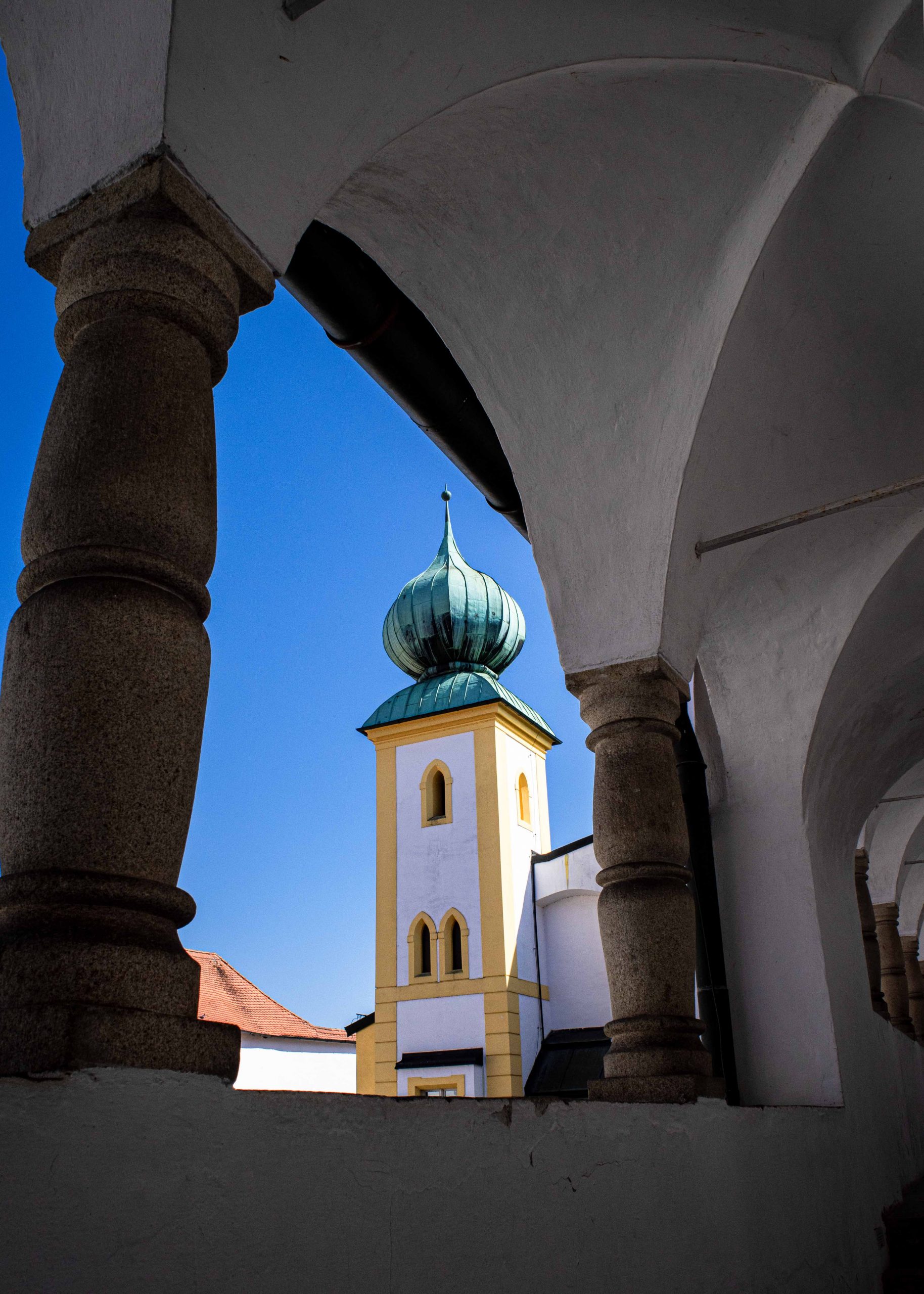
St. Stephen’s Cathedral
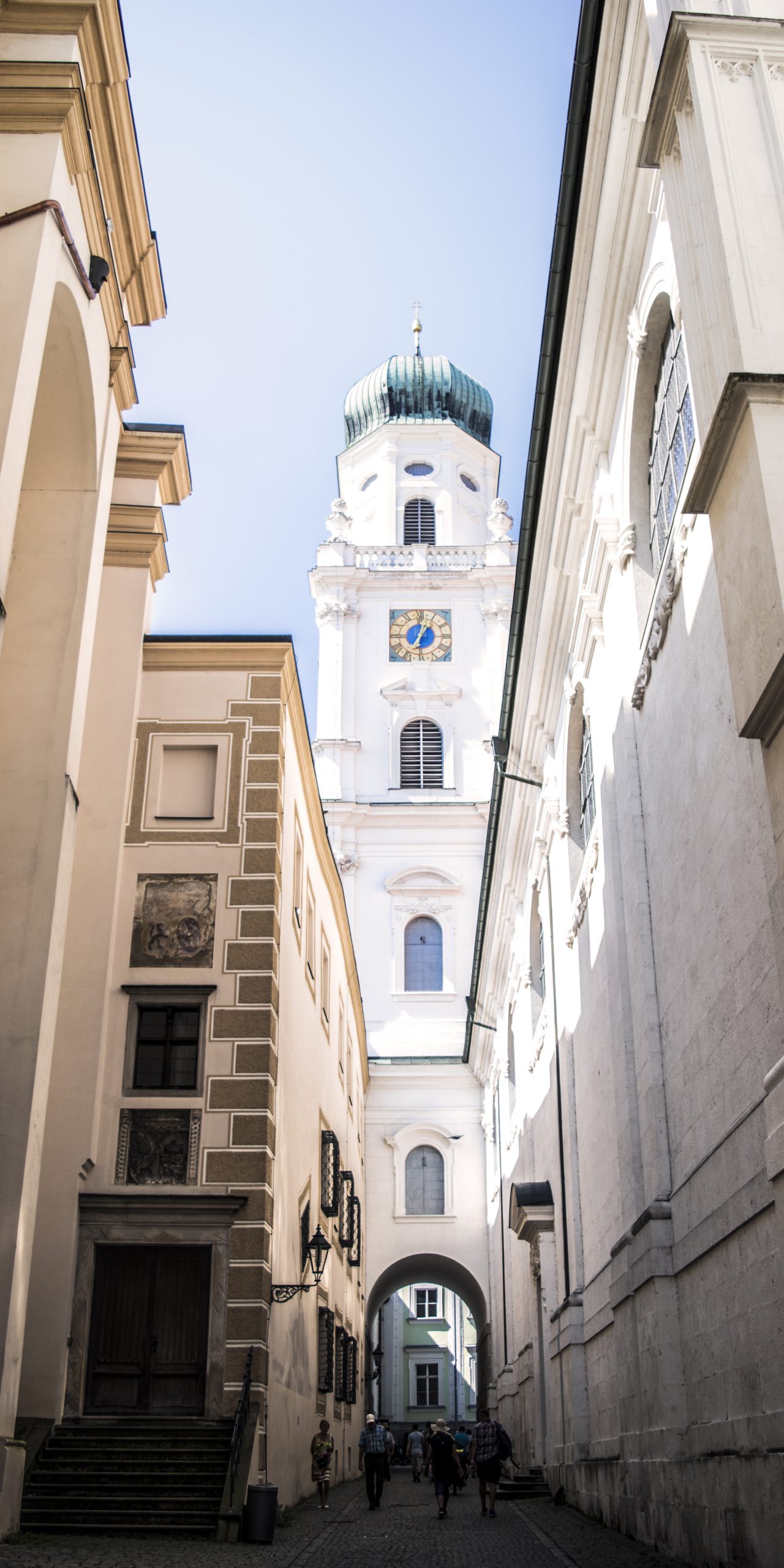
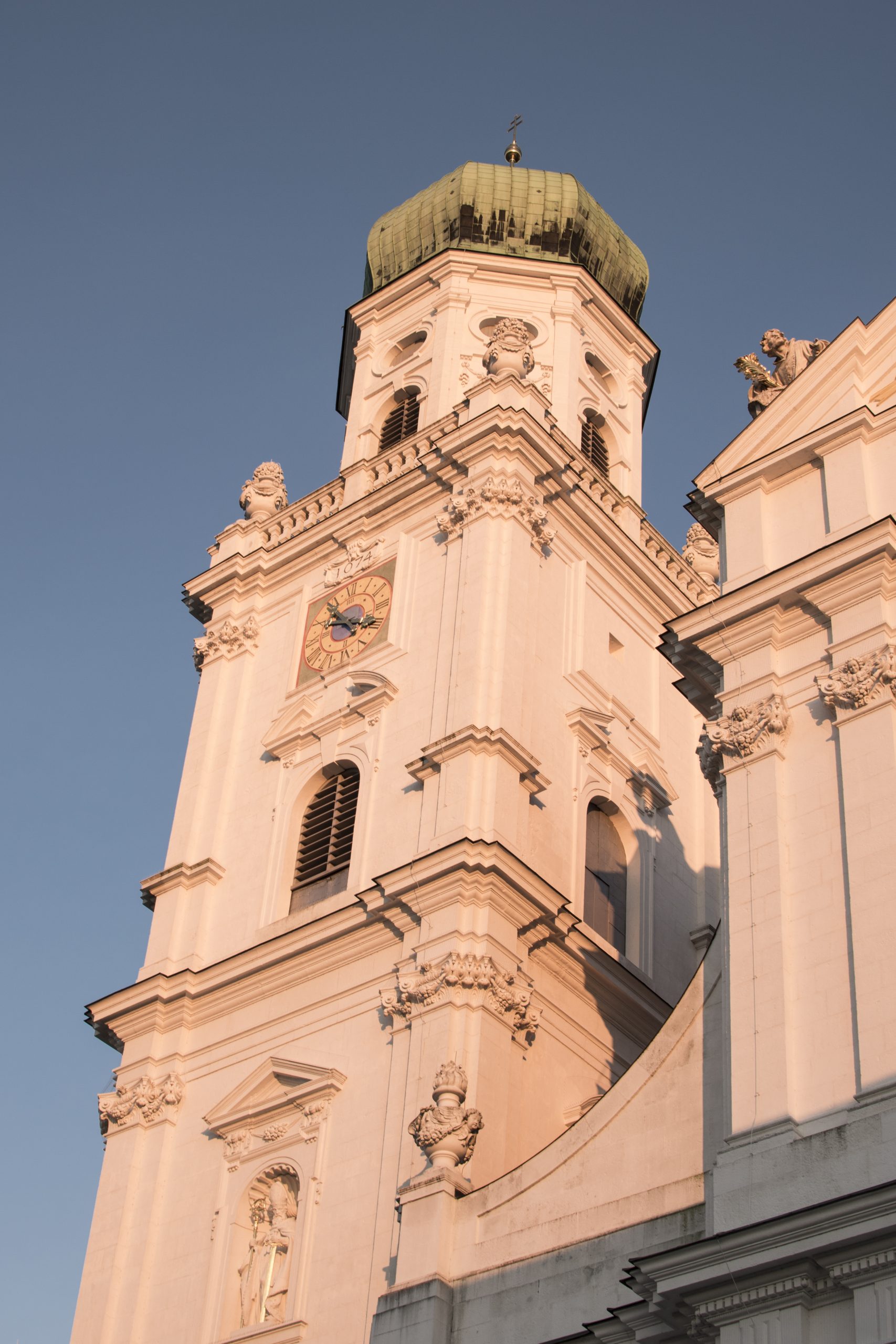
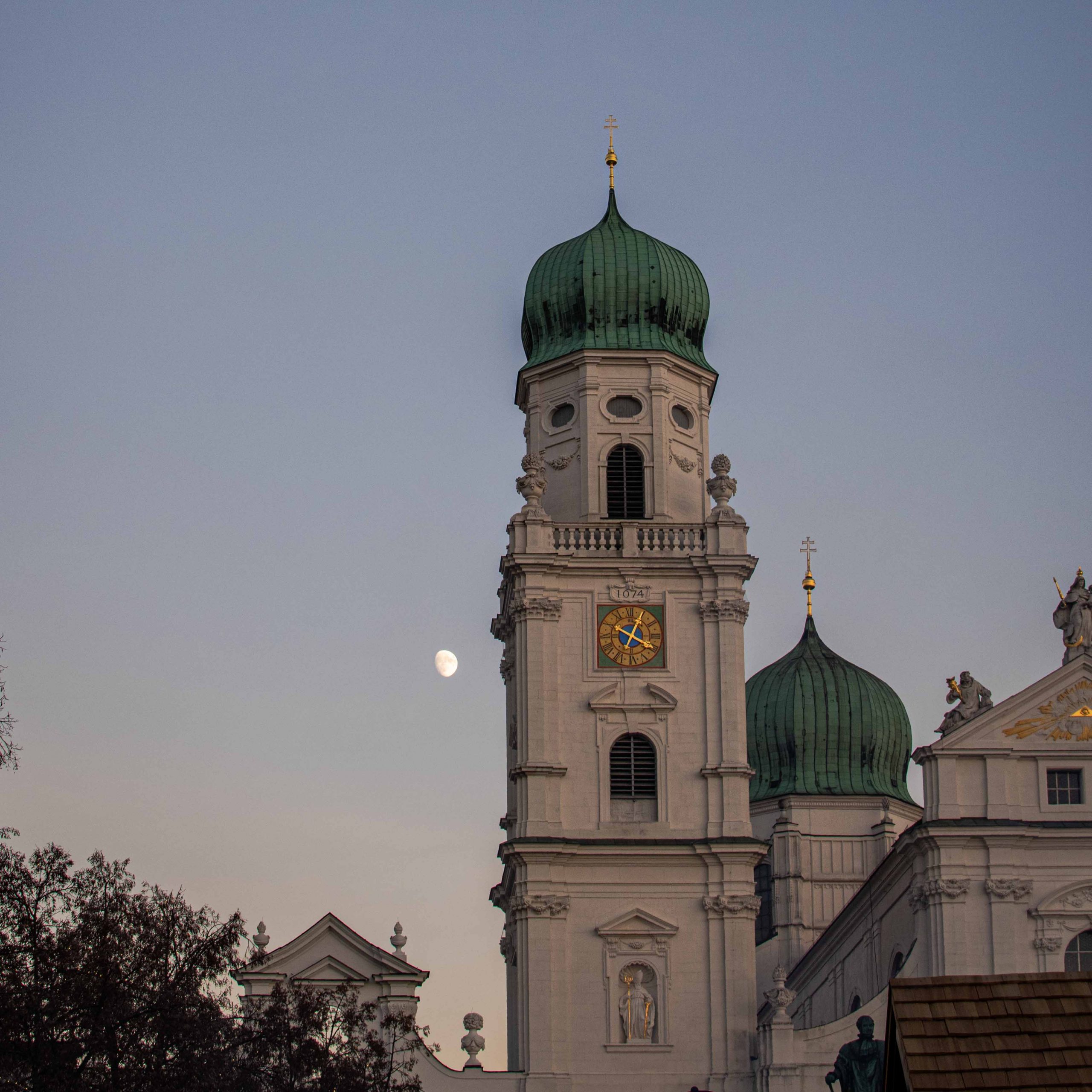
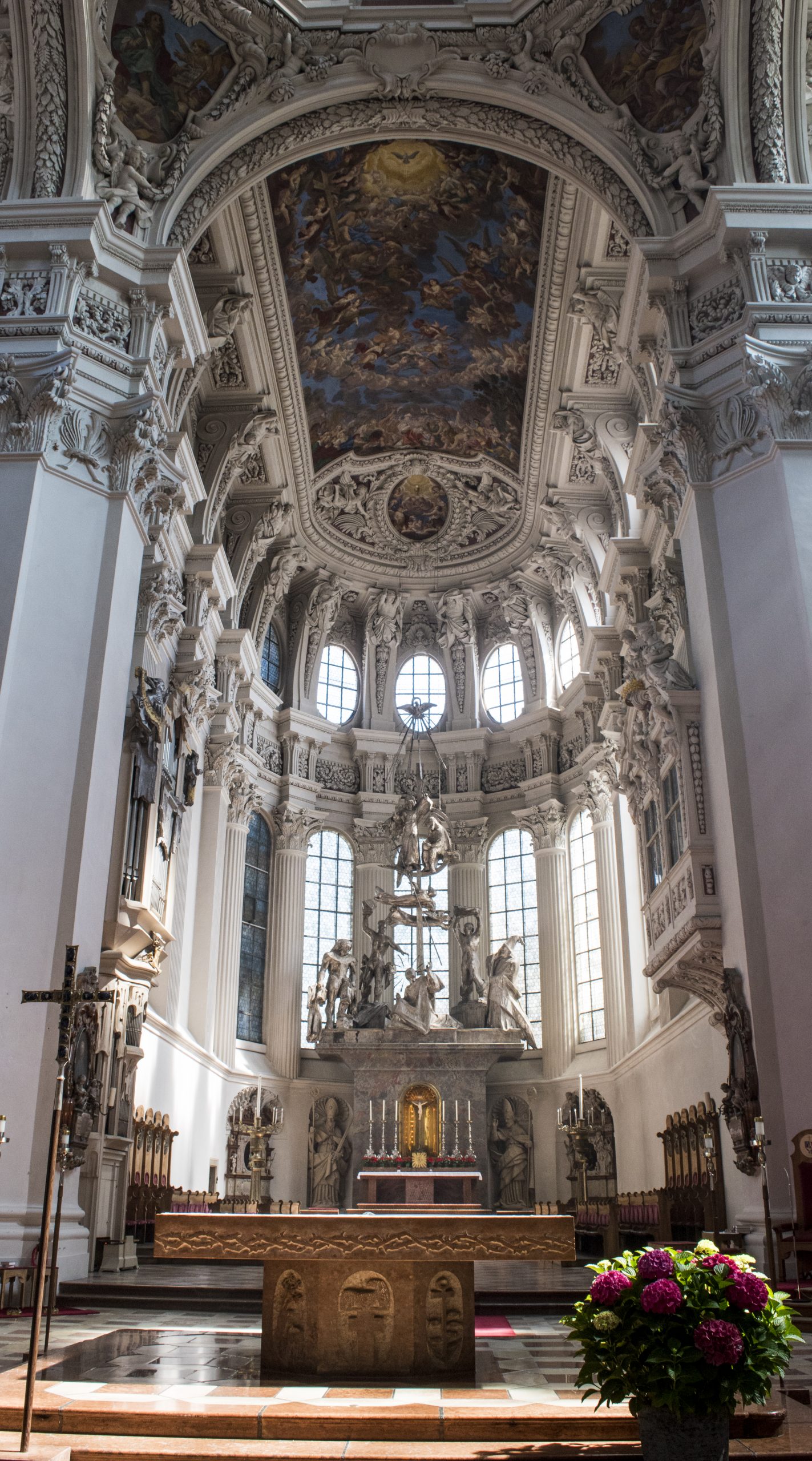
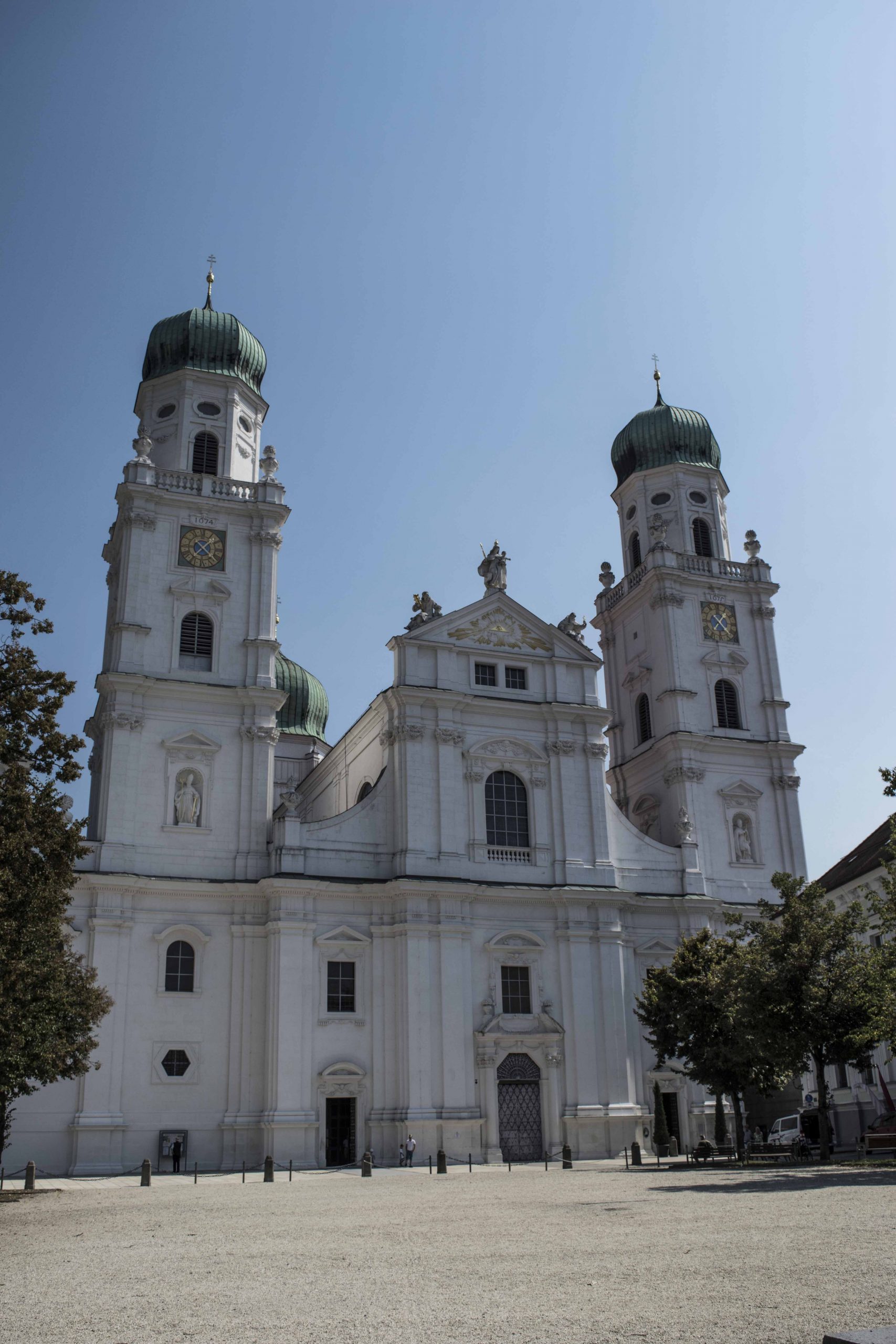
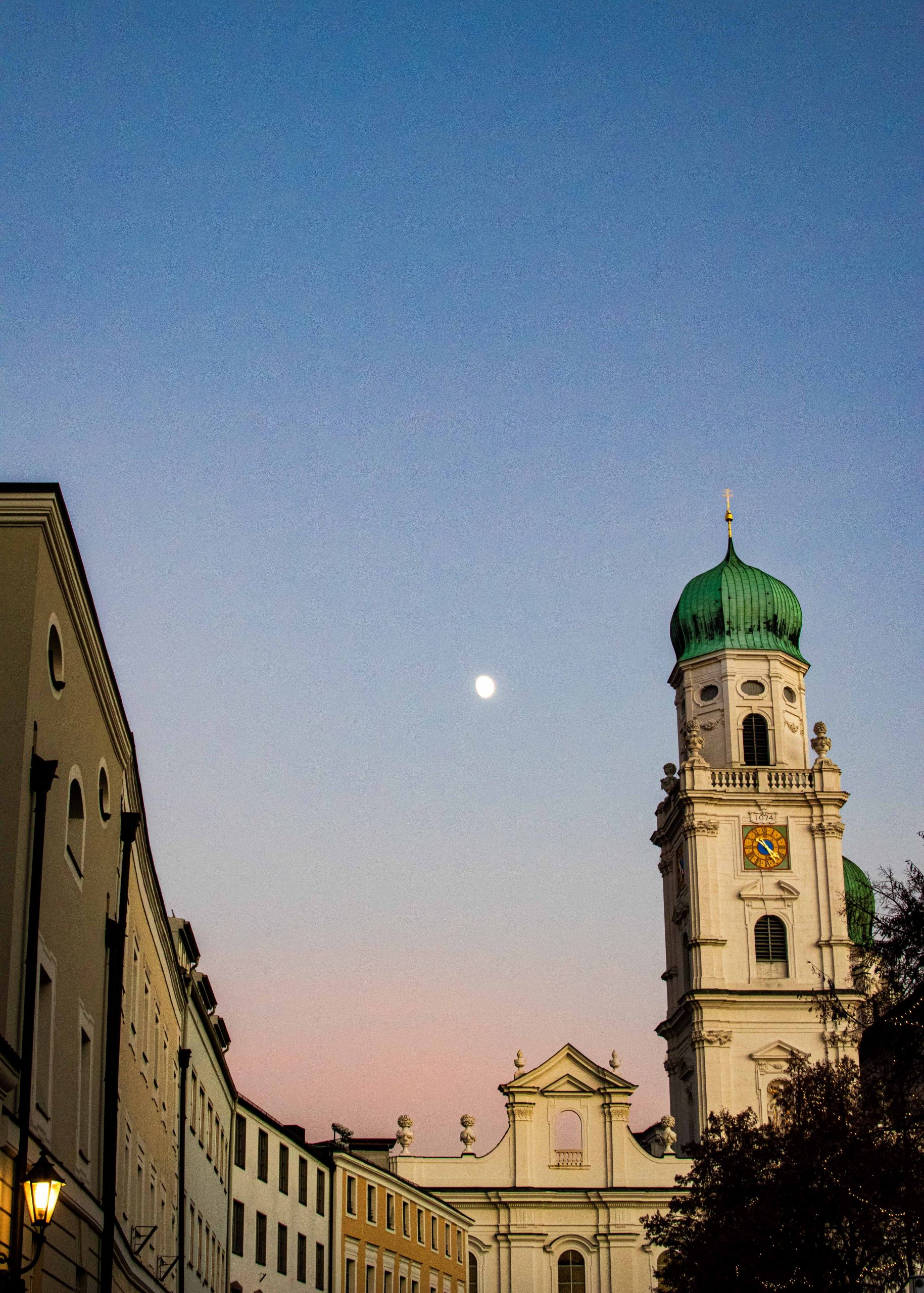
The magnificent building with its white towers and blue-green domes is one of the most remarkable baroque cathedrals north of the Alps. The late antique city of Batavius became the main diocese centre at around the year 450, but whether there was a temple situated at its highest point is debatable. However, an episcopal basilica was mentioned from the end of the 8th century. There were several significant periods in the construction of the cathedral, with only the late Gothic (1407-1590) and Baroque (1668-1698) having left traces to this day.
When in 1407, Prince Bishop Georg v. Hohenlohe (1390-1423) laid the foundation for the construction of a late Gothic cathedral in Passau, he hardly expected that its construction period would last 160 years, nothing that remarkable being familiar with the history of other Gothic cathedrals in Europe. As well as his cathedral would go unfinished for its consecration somewhere between the years 1565 and 1570. At that period Passau had never seen or experienced such a high concentration of talented workforce of stonemasons, bricklayers, carpenters, painters, sculptors, woodcarvers, gold and silver smiths, suppliers, distributors and guilds before. In 1444, Eneas Silvio Piccolomini, later elected as Pope Pius II, wrote to Rome from Passau: “A magnificent chancel is being built here”.
The late Gothic cathedral, its dimensions and features, the use of different material, the bold statics on the nave and crossing tower, the subtle structural outline of the chancel, as well as the number of used workforce, received admiration over many generations by the respective contemporaries.
In 1480, the Passau Cathedral builders’ guild was recognised on fourth place after Cologne, Strasbourg and Vienna. At the end of 15th and the beginning of 16th centuries in the area around the cathedral construction, prominent artistic families settled down in Passau’s Altstadt. From 1510 to 1553, the painter and builder Wolf Huber worked and lived in Passau as one of the master builders of the so-called Donaustil (Danube style).
Illustrations, such as the woodcut in the Schedelschen Weltchronik (the Nuremburg Chronicle) from 1480, the woodcut the Depiction of Jesus Christ in the Temple with the interior of Passau’s late Gothic cathedral made by Wolf Huber around the years 1523 and 1525 and other engravings from 1576 are documenting the magnificence of the Gothic St. Stephan Cathedral.
Apparently, all this perfection, splendour and beauty resulted in immense envy, because in 1662, nearly 90 years after the Gothic cathedral’s completion, a devastating fire destroyed the whole medieval town and its main temple. In the ravaging flames the cathedral almost completely burned down, only the chancel, the crossing tower and remained, which were included in the reconstruction by the Italian baroque architects.
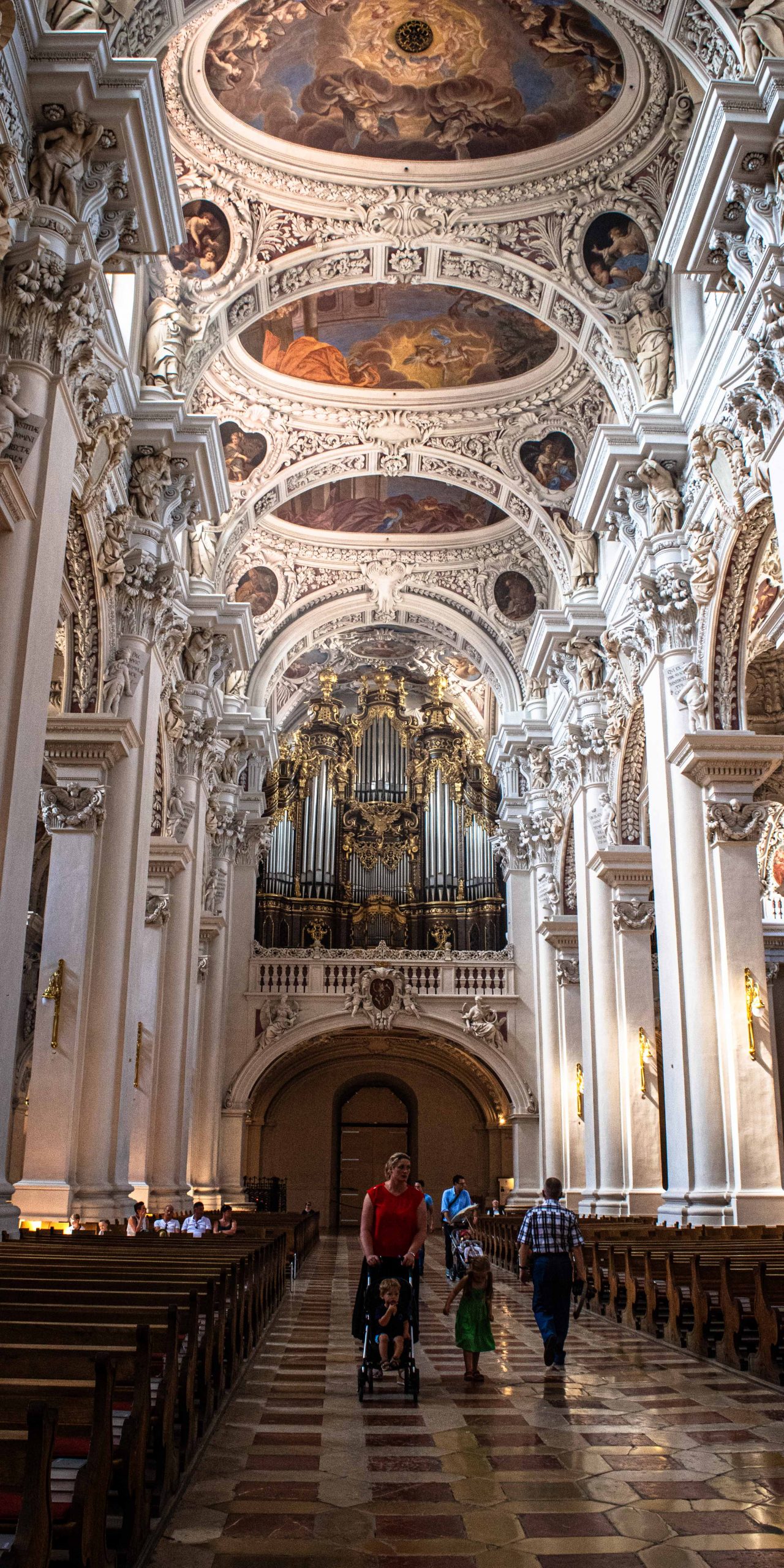
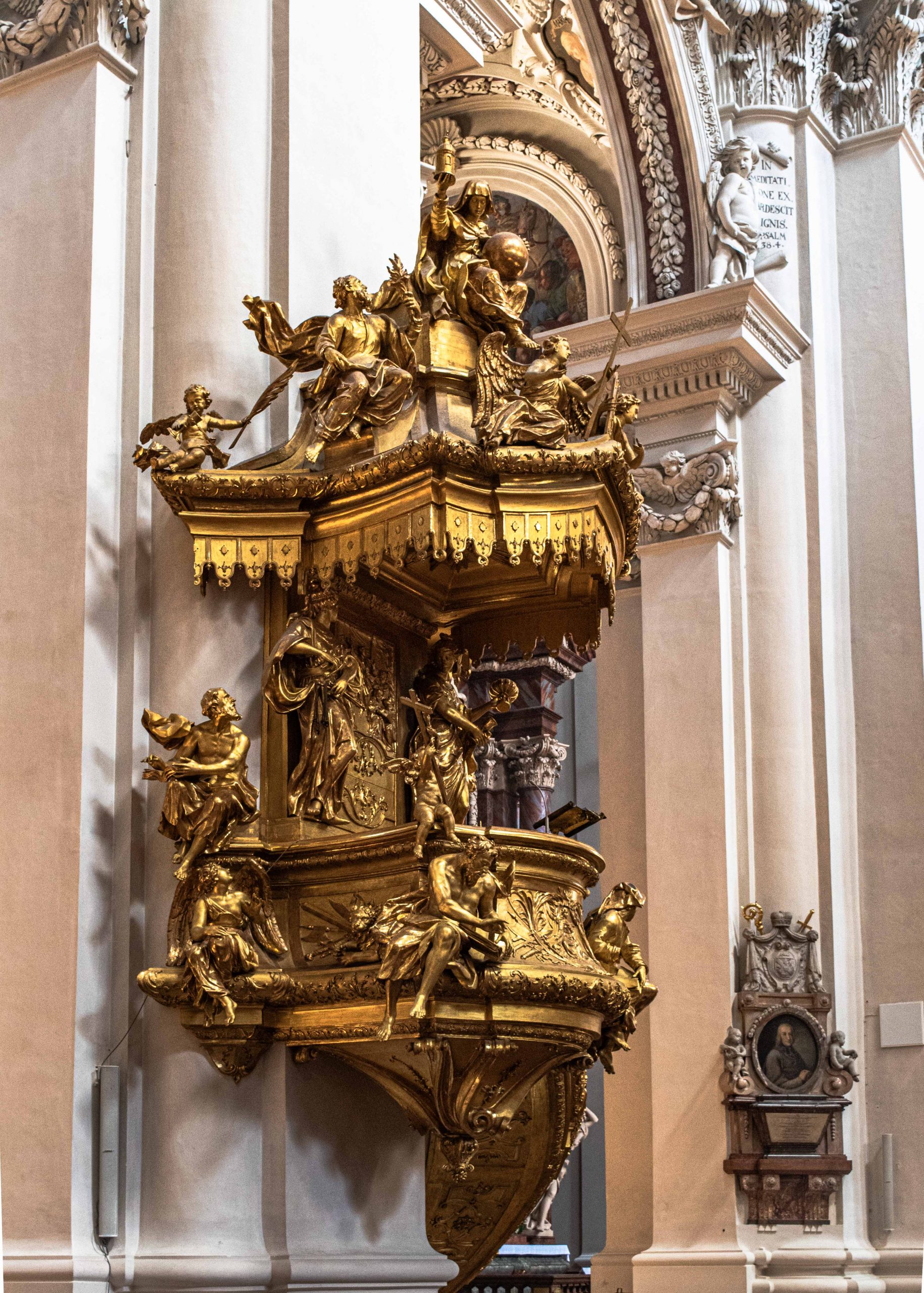
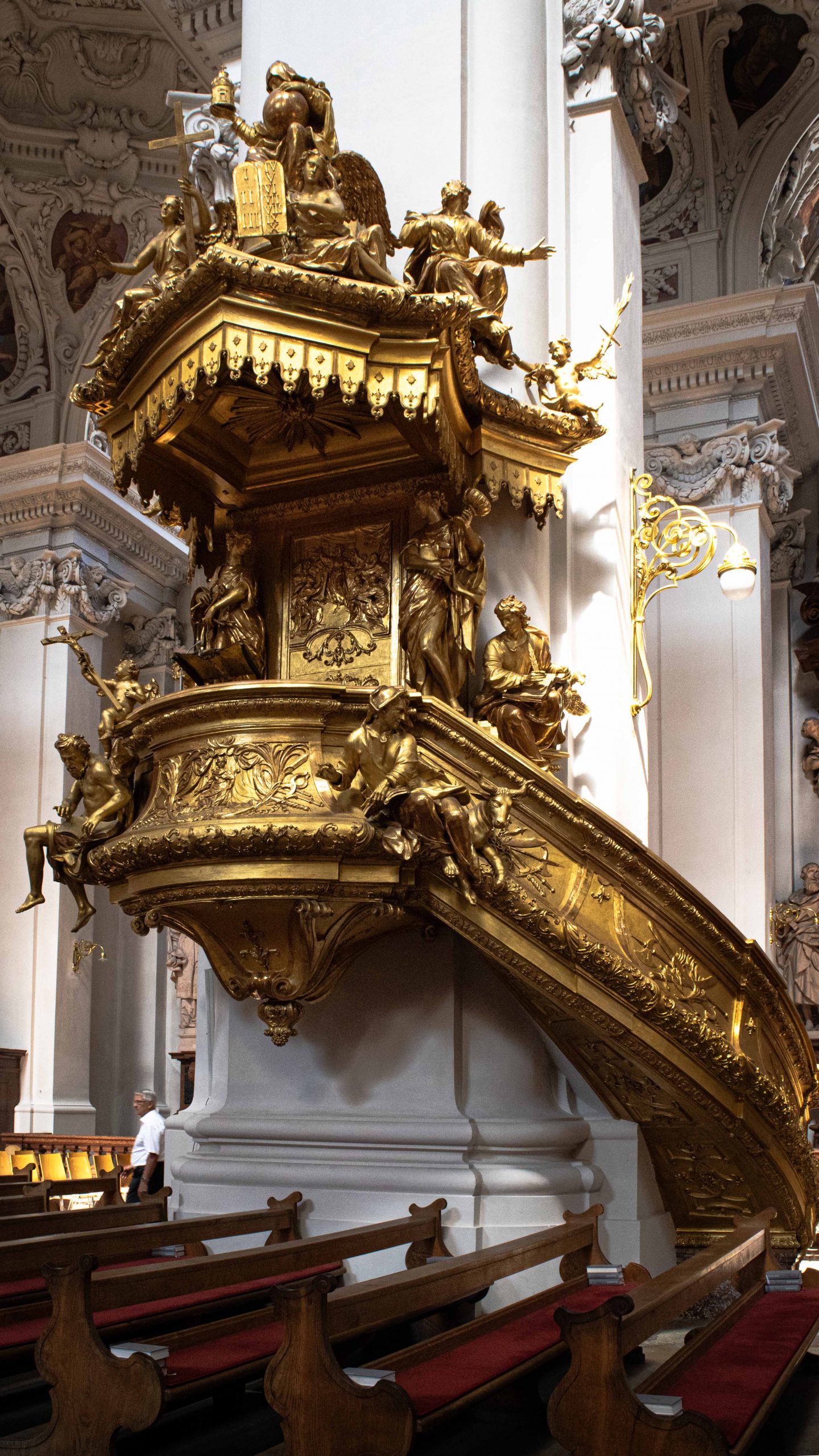
When appointed to the office, prince-bishop Wenceslaus, Count of Thun (1664–1673) summoned the famous architect Carlo Lurago who gave the church its current Italian character. The ornate interior was lavishly decorated by Giovanni Battista Carlone with baroque stucco elements in the spirit of the epoque. In 1679 Carpoforo Tencalla painted the frescoes; later, Matthias Rauchmüller from Vienna took over their design in the side aisles, and after his death was succeeded by Carlo Antonio Bussi from Bissone.
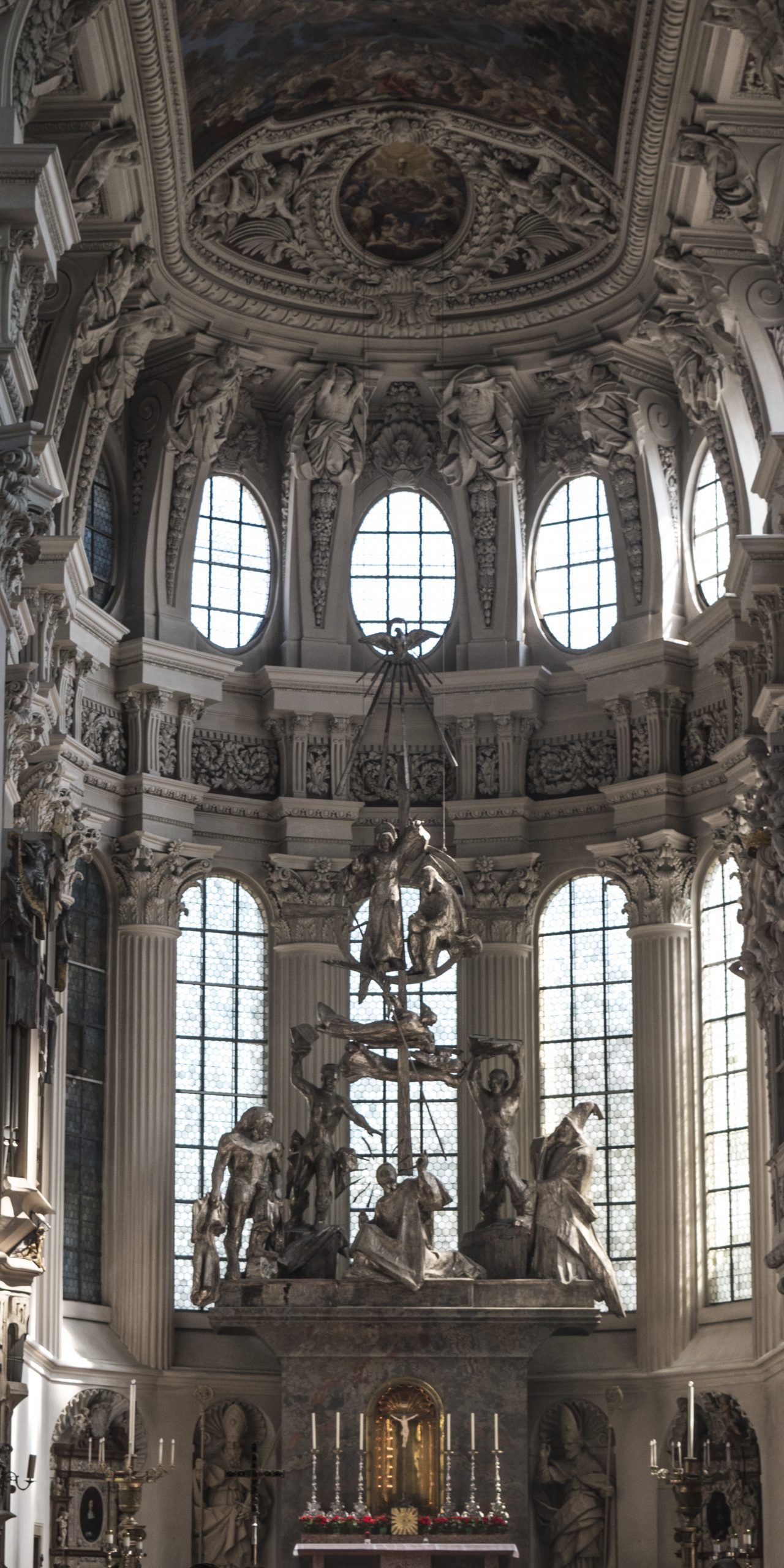
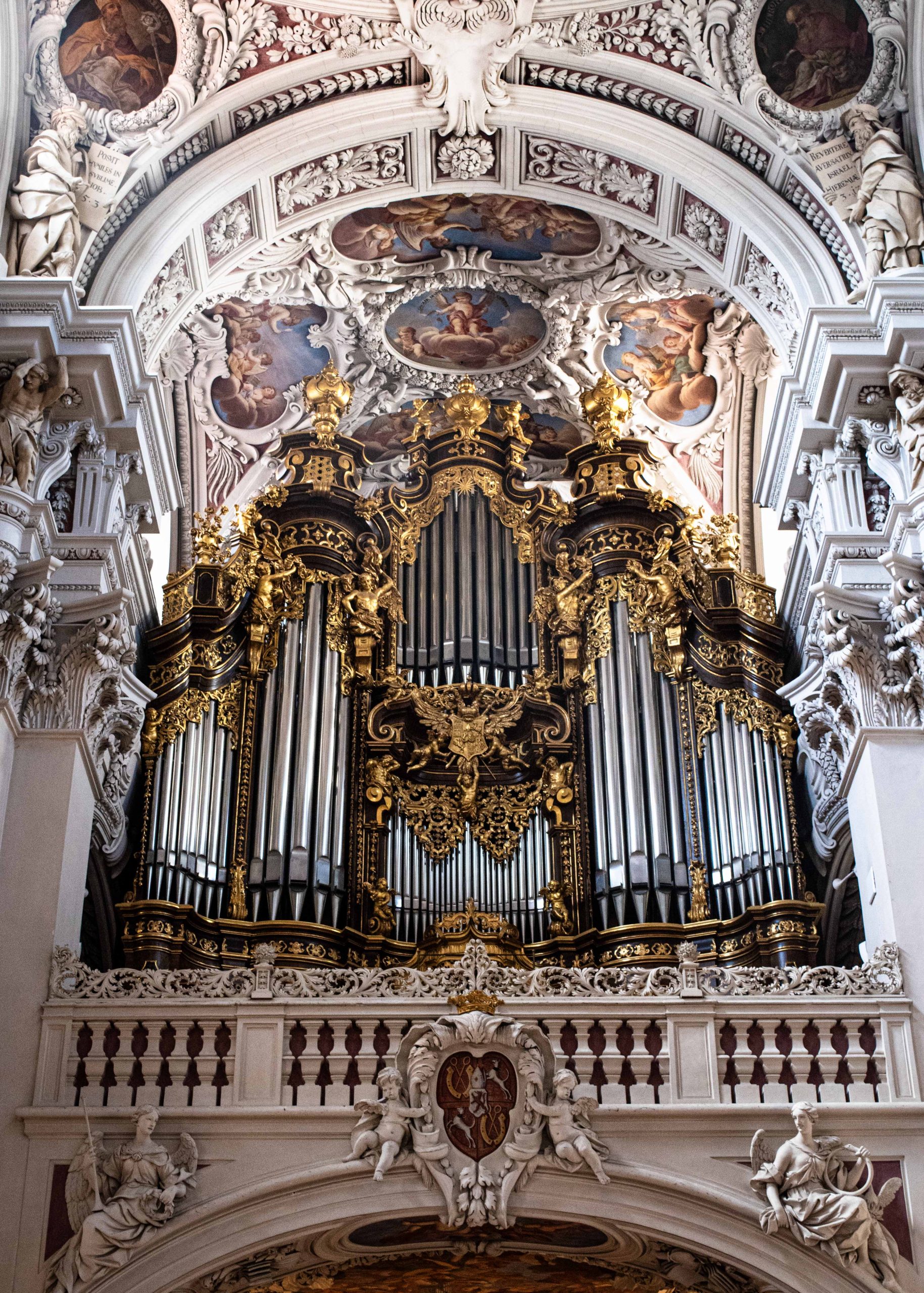
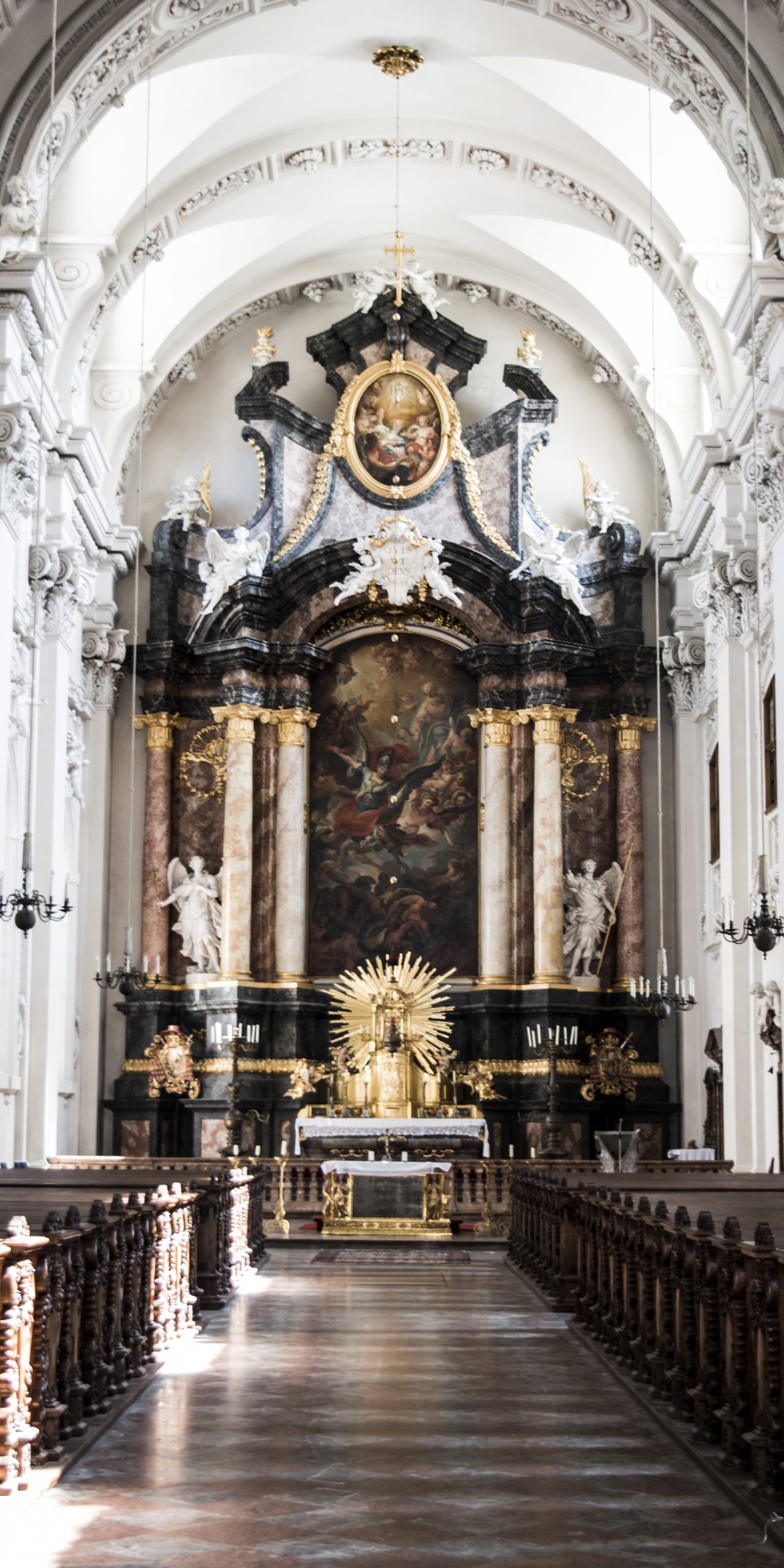
Today, St. Stephen cathedral is one of the biggest Italian baroque buildings north of the Alps. It would be impossible to talk about it without mentioning its most exceptional treasure – the largest cathedral organ in the world with five individual installations, 17,974 pipes and 233 registers. When the organist plays the five pieces – the main organ, the epistle and gospel organ on the west gallery, the choir organ at the chancel entrance and the so-called Holy Spirit outlet (sounds through outlets installed in the attic ceiling), in the cathedral’s nave, the melody and tones sound through the whole church. The cathedral organ concerts are among the highlights when visiting Passau. Hearing the unique sound of this instrument in the sublime atmosphere of the cathedral is an emotional moment and unforgettable experience. As if lit by divine light streaming from the high ornate windows, the modern and monumental figurine high altar depicts the stoning of the cathedral’s patron saint in the front of the former Gothic window façade.
Residenzplatz and Wittelsbach Fountain
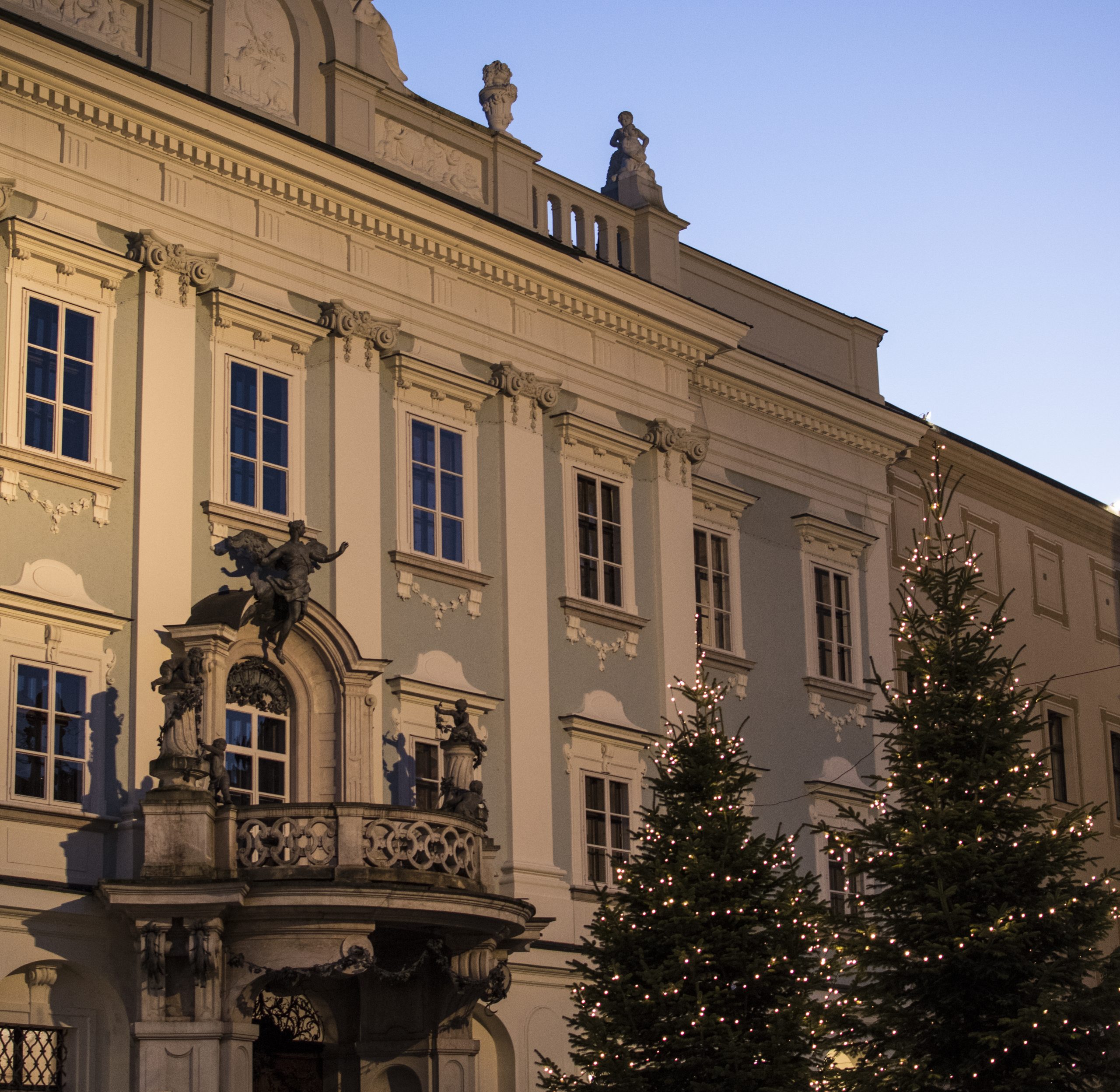
Part of the history of Passau can be traced in the splendid well-preserved mansions, Patrician residences, prince-bishop’s New Residence and the gothic cathedral choir, as well as narrow streets between the Danube and Inn in the Altstadt.
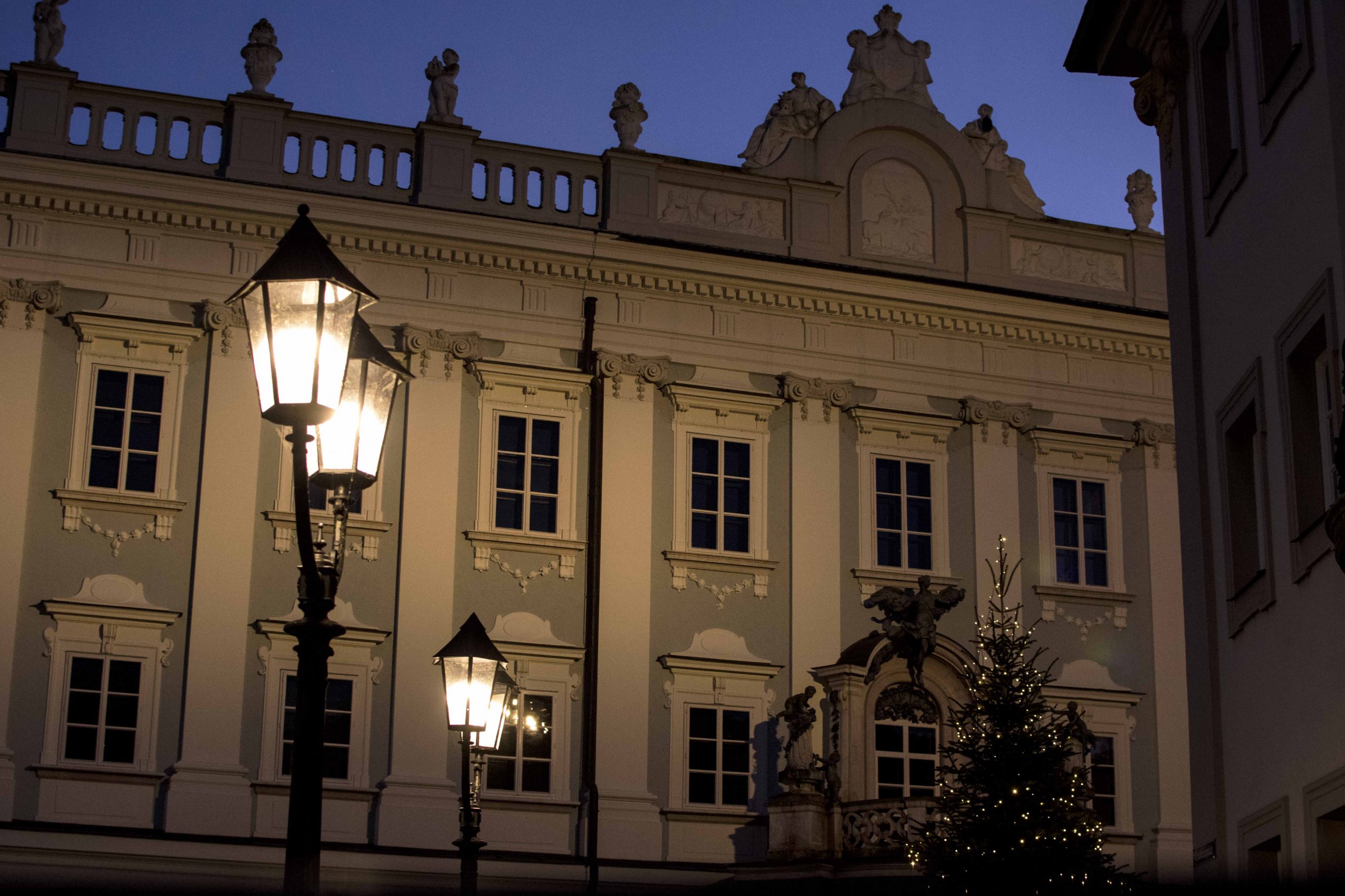
The magnificent palaces, the representative splendid Residence of the Prince-Bishops of Passau and the Gothic cathedral choir, all these remarkable buildings turn Residenzplatz into an ultimate artwork. It is renowned as one of the most beautiful baroque squares north of the Alpes. Until 1712 it was a grim place named Unter den Krämern (“beneath the grocers”), where the big merchants’ warehouses were located. The rumour has it that they were torn down under the orders of Prince-bishop Lamberg for construction of a new spacious residence, as his court became a bit too big for the Old Residence.
In its middle, the Wittelsbach Fountain with its rippling cascades completes the Mediterranean flair and Italian splendour. Built in 1903 on the occasion Passau’s 100th anniversary as part of Bavaria. The Wittelsbach Fountain was created by the Munich-based sculptor Jakob Bradl. It shows Mary presiding on the middle column. At her feet, there are three angel-like symbols of Passau’s three rivers: Danube has wheat in its hair, Ilz is adorned with pearls and Inn wears a Tyrolean hat.
Schaiblingsturm
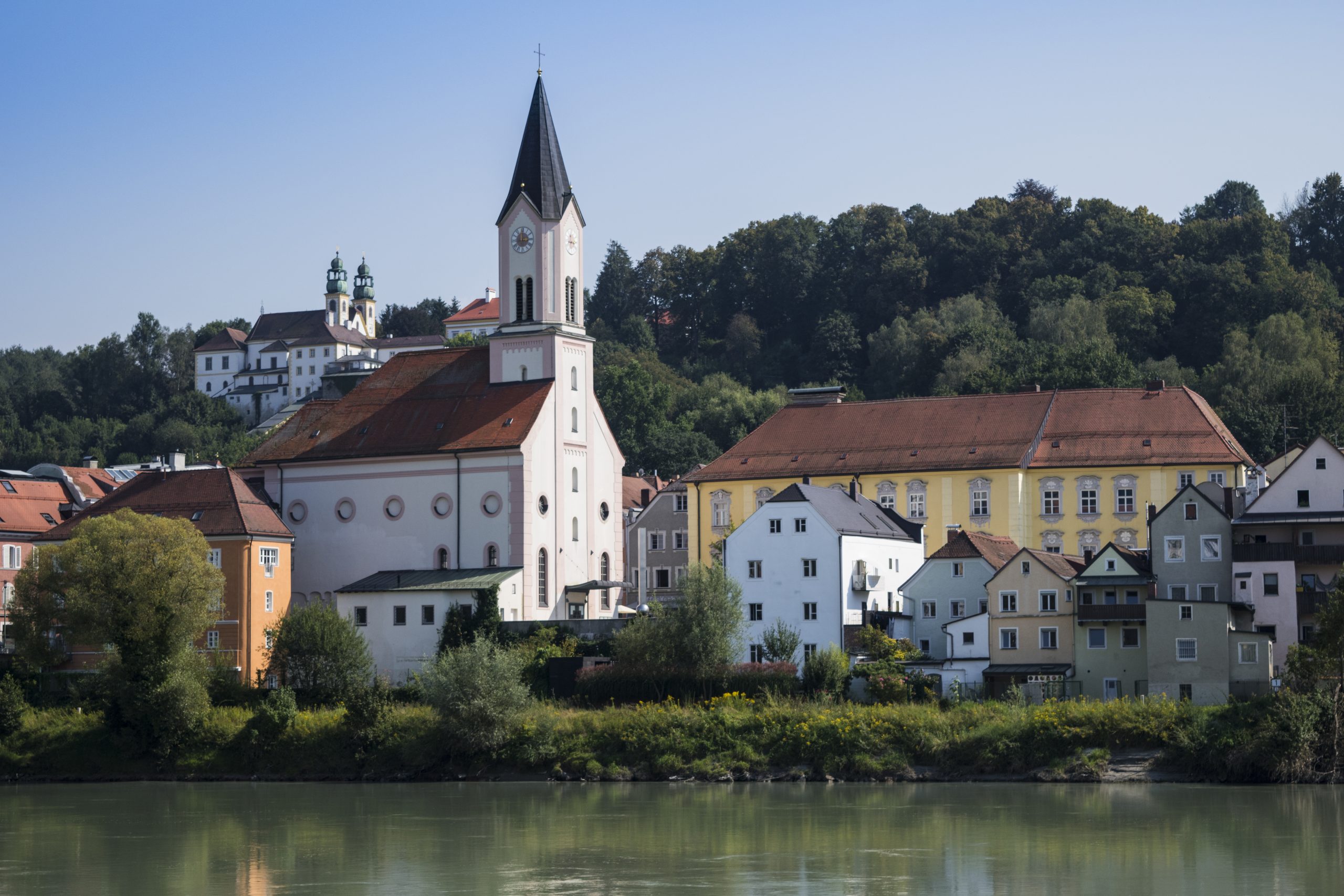
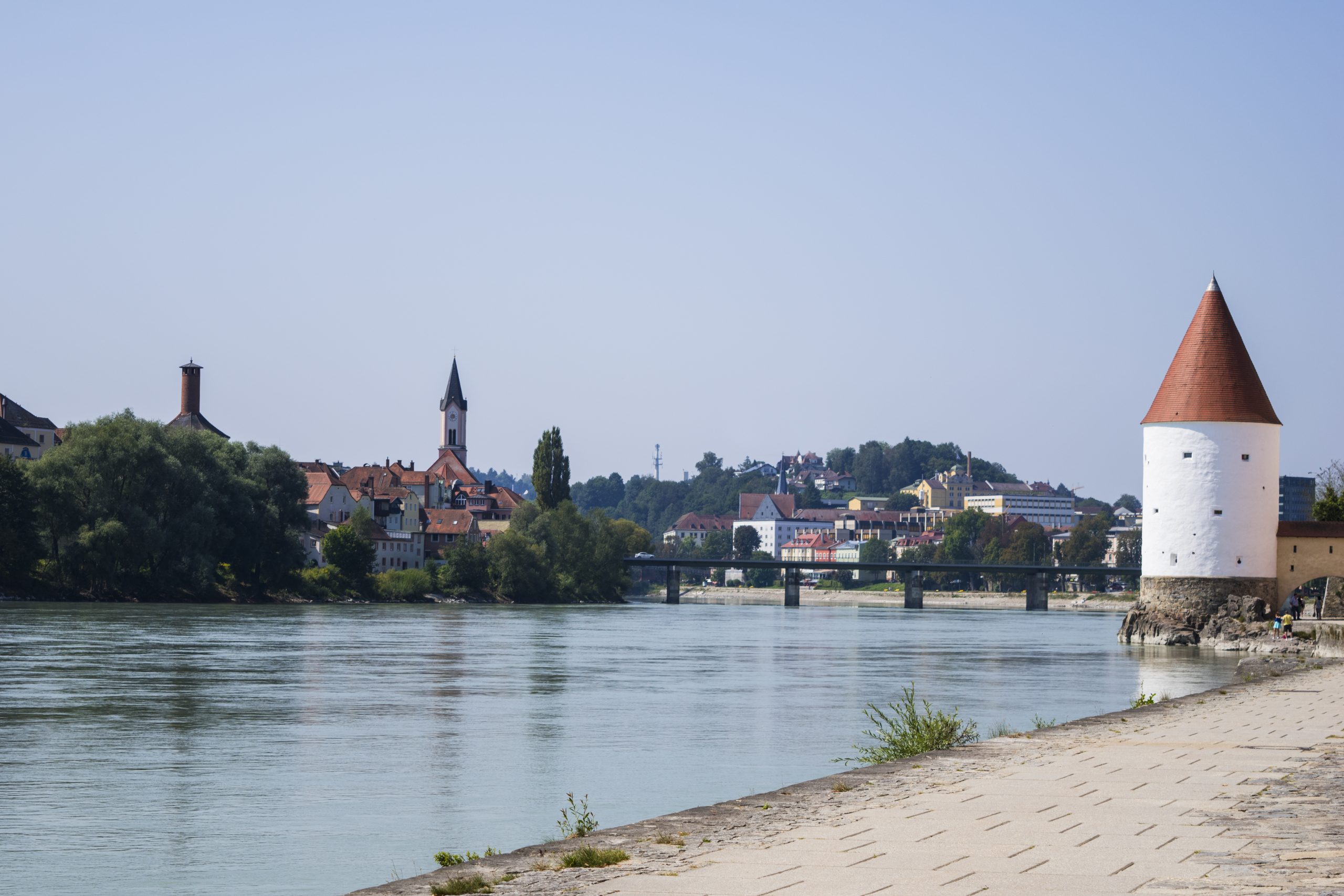
Back from the walk along the winding streets and narrow alleys of the historic Old Town, along the romantic riverside of Inn, we were impressed by a round tower with its pointed roof, dominating the view over the Innkai. The Schaiblingsturm is a popular photo spot and throughout the centuries it has had several functions. Today it belongs to the secondary school Leopoldinum and is used for workshops.
Constructed in mid-1250 on a rock at the shores of the river Inn, it was initially a defense tower as a part of the medieval town walls. After renovation in the 15th century, it served as a storage tower for salt coming from the salt mines of upper Inn. At the time of salt trading, the Schaiblingsturm was mooring point for boats, as well as cable ferry to Innstadt.
For quite some periods the city watchmen were its main residents. Today the Schaiblingsturm is habitable with central heating and a toilet.
As a real survivor from the devastating fires of 1662 and 1680 without any damage and unscathed wooden roof structure, Schaiblingsturm was once adorned with splendid frescoes on the water side. Wind, weather and water eroded most of it. The frescoes showed St. Christophorus, St. Nikolaus and the municipal coat. For a long time, it had a bare grey stone façade, which after the renovation in 2004 shines again bright white from its original plaster with lime and sand.
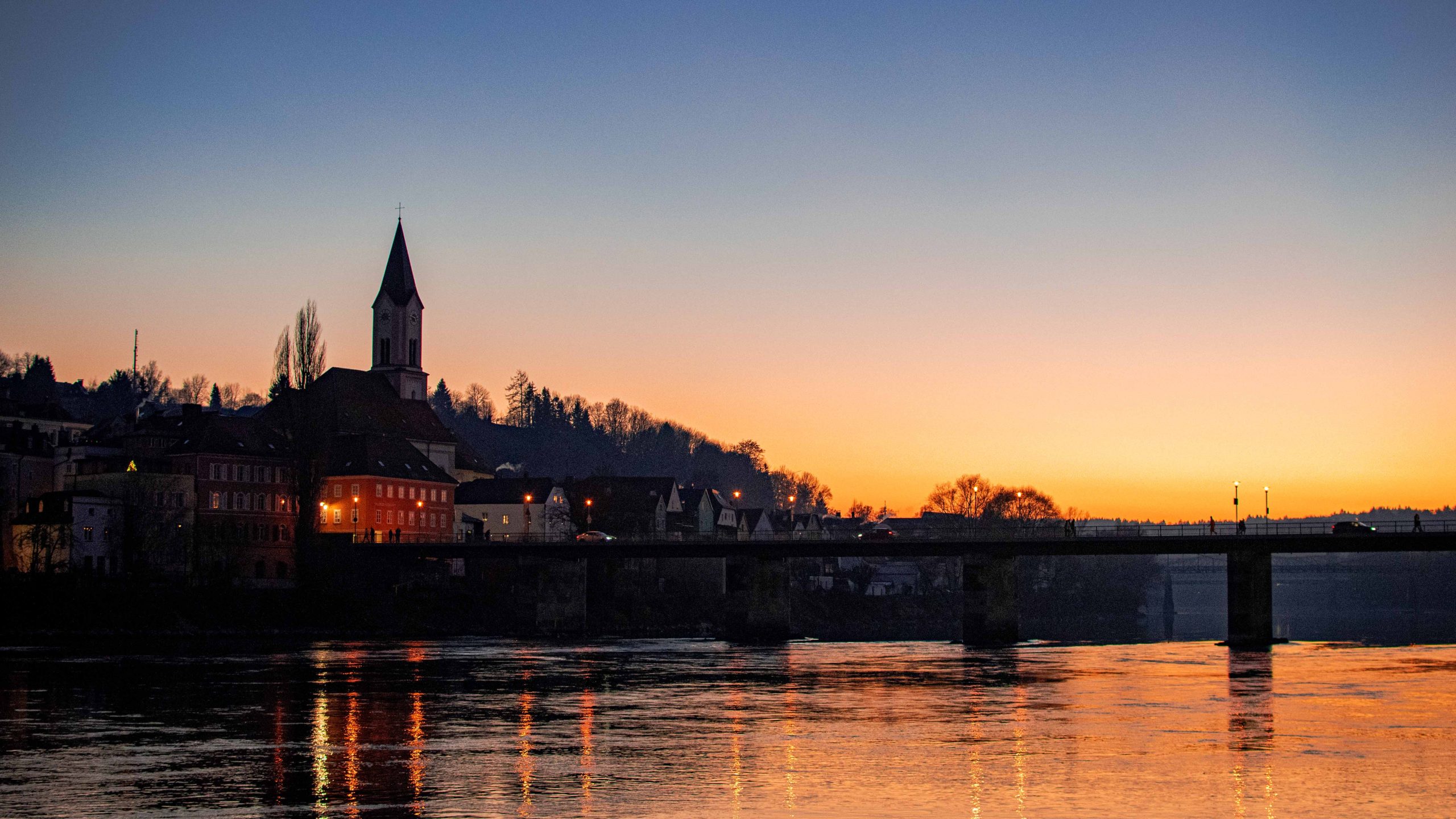
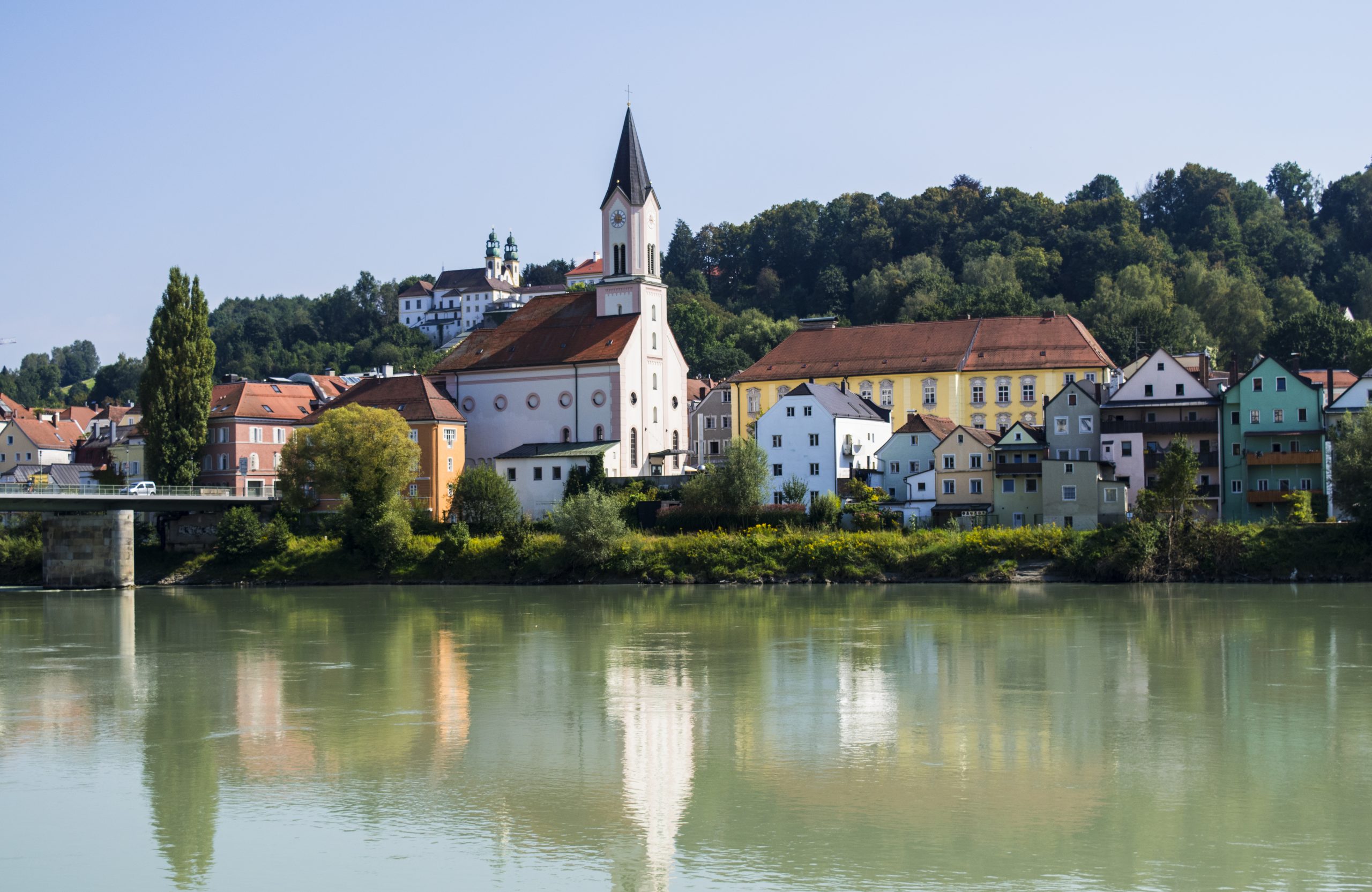
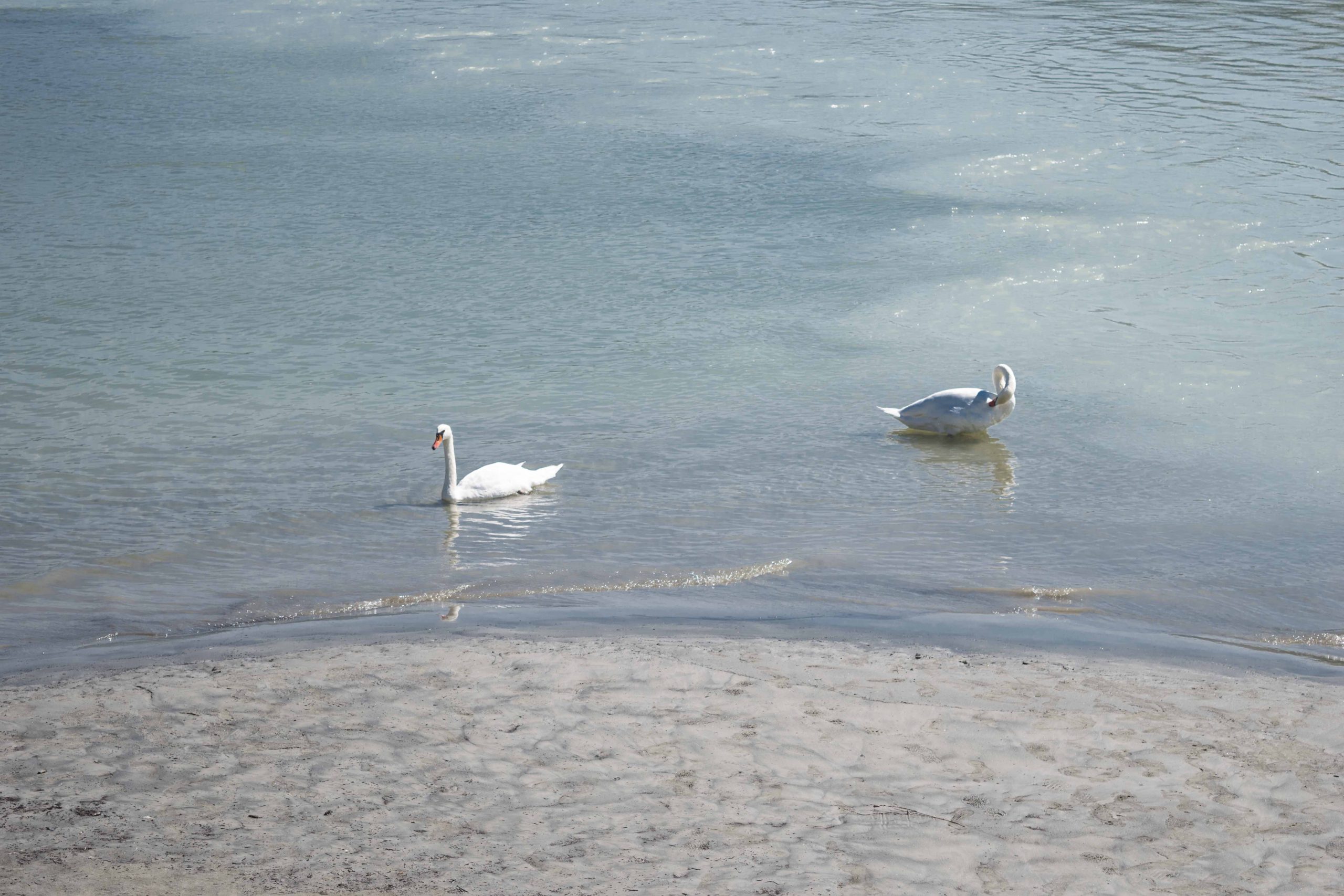
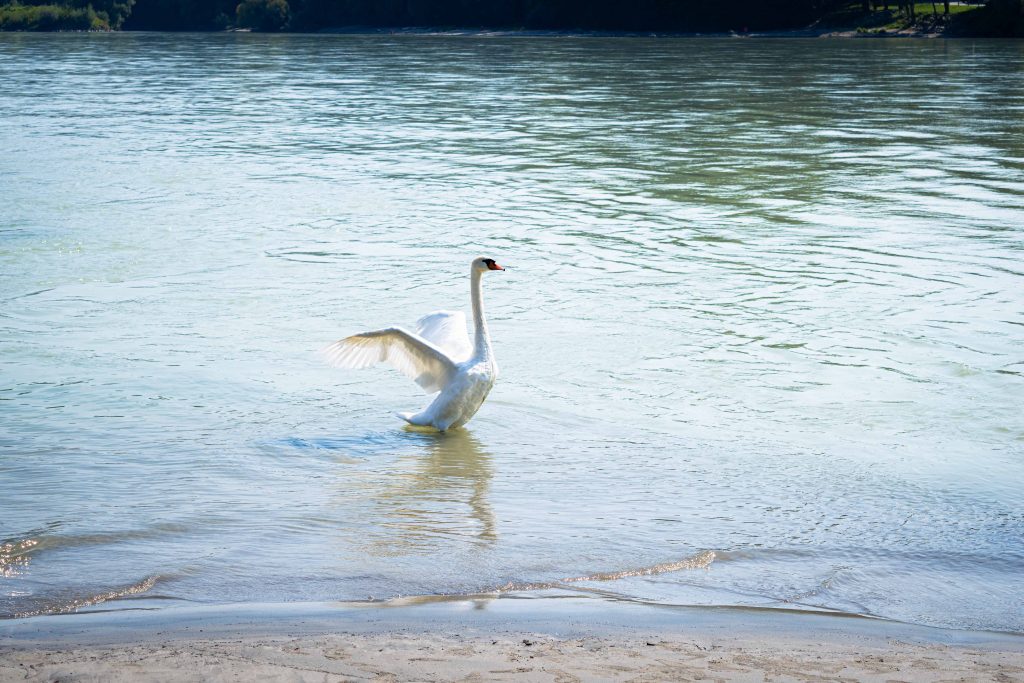
At a convenient distance from Munich, Linz or Salzburg, Passau is worth the detour for a day trip. The baroque architecture, the confluence of the three rivers or just a day cruise aboard the river ships, choice is yours. Now and again, independent on the season, you can enjoy a day with a lazy stroll on the riverbanks, wander in its cobbled stone streets and window shopping, a coffee or Bavarian cuisine lunch on one of its sunlit squares overlooking the Danube. Or marvel at the winter charms of the Passauer Christkindl Markt with its scents of cinnamon and gluhwein. And if lucky, watch the swans in the shallow waters of Inn and Danube at the Dreiflussecke.
Curious to investigate further? Find out here more.